130 Million Meals made by Robots: Rajat Bhageria of Chef Robotics
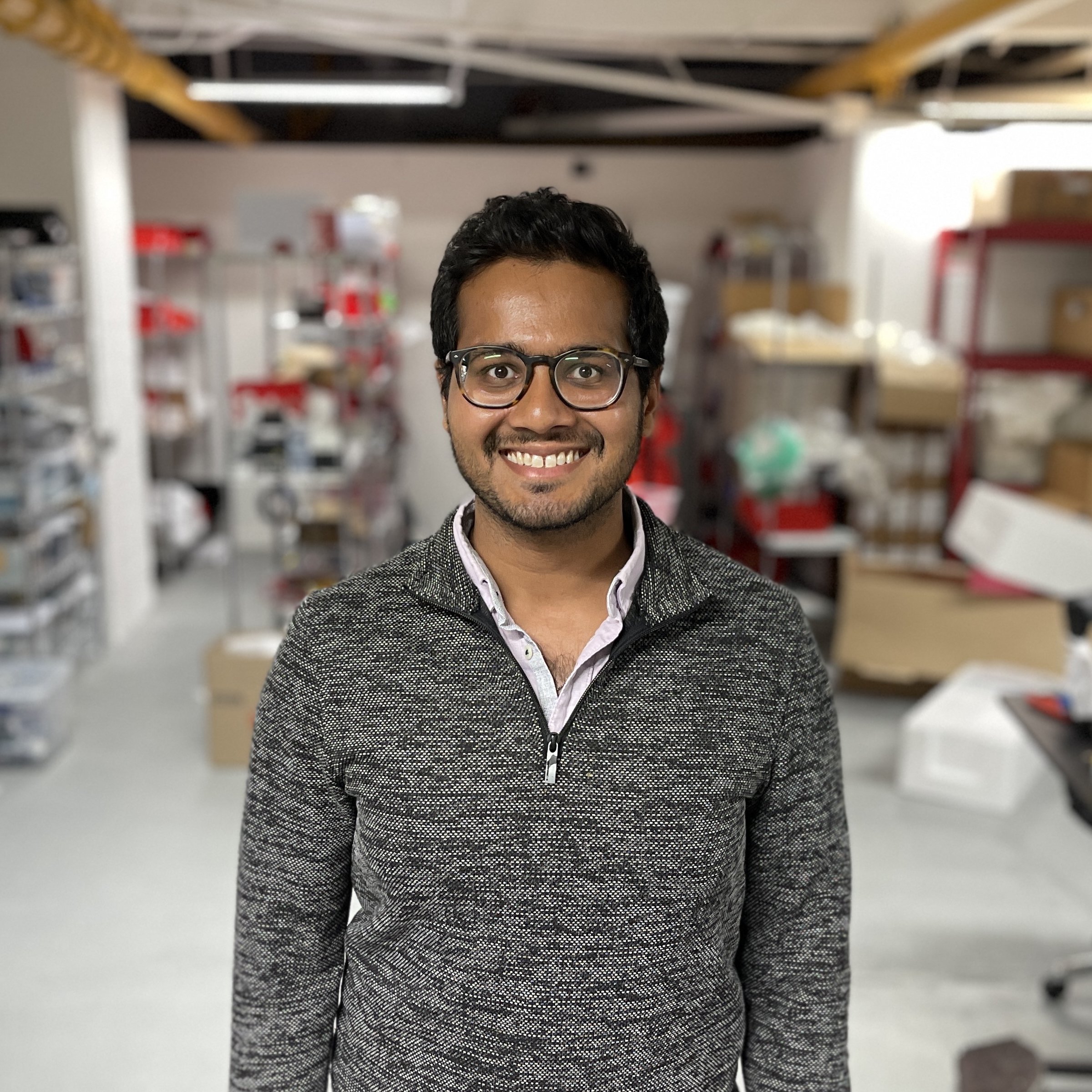
Thrilled to introduce Rajat Bhageria, the founder and CEO of Chef Robotics, which builds AI-powered robots for food manufacturing.
Chef’s robots have already made roughly 130 million servings deployed across the US, Canada, and Europe.
We get into how robots are transforming food production, from reducing labor shortages and improving food safety to eventually making personalized meals cheaper and more accessible.
If you’re interested in robotics, physical AI, or what happens when automation reaches one of the world’s largest industries, this episode is for you.
Links to Platforms:
We discuss:
How Chef Robotics reached 130 million servings
Making food cheaper, safer, and more consistent
Personalized meals built around your health data
Why production data creates a physical AI moat
Why specialized robots may beat humanoids in industry
Automating repetitive jobs without eliminating workers
Why a founder’s job is sales (in every direction)
Building urgency and customer obsession
Quotes from Rajat:
“Why are people still doing these redundant motions eight hours a day in a freezing cold room? It’s a crappy job.”
“If you are doing the same exact task for eight hours a day, you want a machine to do that task.”
“You'll have perfectly customized meals based on you as an individual.”
"In the future, you'll see a lot fewer Americans making food at home.”
“Automation tends to create a lot of jobs, and create a lot of general wealth.”
“Home robots are kind of like the final boss of robotics.”
“Our customers want superhuman performance for our tasks.”
“No matter where this physical AI landscape’s gonna go, data is always gonna be useful.”
“An exceptional engineer has a lot of options, and we gotta convince them almost as if we were convincing an investor.”
“Your job as a founder is to drive urgency every single day."
Want to invest in early-stage startups together?
We invest in the geniuses building utopian technologies.
We write small checks to 10-15 very different startups each year. Previous investments include Aalo Atomics, Ouros Energy, Stell Engineering, Airship, Terraform Industries, Longshot, Dirac, Atlas, Atomic Industries and 40+ more.
Our Website has background on the fund, our past deals, and more.
Startup investing is risky, illiquid, and not for the faint-of-heart. Be warned.
Accredited Investors: reply to this email, and we'll get you into our new investments starting this quarter.
Learn more about Rajat Bhageria
Additional episodes:
The Next Renaissance, AI Reality vs Hype, and a Movement of Hope with Zack Kass
Robotic Delivery Tunnels with Garrett Scott of Pipedream Labs
Episode Transcript:
Rajat Bhageria: In food, there's been a lot of people who haven't succeeded, but my kind of simple thinking was like, it is one of the biggest consumer spend categories. Therefore, if you can build a great business, you can probably come up with one of the biggest kind of value-creating businesses of all time.
Eric Jorgenson: Who are the customers you're working with today, if you can, if you can share, just to kind of give people a, a better mental picture of what these robots are doing?
Rajat Bhageria: Today, if you were to go to, like, basically any retailer in America, whether it's Costco or Starbucks or Whole Foods or what have you, you can find chef-made stuff, and that's pretty cool. And, and yet we are making food that, like, most Americans at some point have had or will have. So they basically rely on, like, humans who are in a 34-degree Fahrenheit cold room scooping food all day long, and that's really what we're helping to kind of automate today at least.
Eric Jorgenson: Today, I'd like you to meet Rajat Bagaria, founder and CEO of Chef Robotics. Chef is building AI-powered robots for food manufacturing, which is tackling one of the most repetitive and labor-intensive parts of the food supply chain. And in this conversation, we break down how he built this company, why specialized robots are gonna beat humanoids, in particular in these kind of industry applications.
We talk about the impact to consumers, us, about cheaper food that's safer and more personalized, and some of the concerns about jobs being replaced. And this is one of the places where I think robots replacing jobs makes everybody better off, and you're gonna see why as we unpack the specifics of food manufacturing.
This is one of the most productive applications of physical AI I've seen in real-time happening indisputably right now. Robots are already changing how our food gets made, and you get to peek behind the curtain today. As you know, I don't do outside sponsors for this podcast anymore, but I'll invite you to invest alongside me in startups through Rolling Fun.
Our mission is to fund the geniuses building utopian technology. So if you wanna support us by supporting them, please open your browser right now and type in rolling.fun, F-U-N. Over the last five years now, we've invested in over fifty companies, including Alo Atomics, who's building nuclear fission microreactors at a massive scale; Airship, who's building gigantic autonomous rigid electric blimps for air freight, which is really crazy; and Terraform Industries, who's reversing climate change by producing synthetic natural gas.
These are just a few of the unbelievable visions that we're able to fund and support and the incredible founders that are getting their companies off the ground that we fund Have the pleasure of investing early and, and getting to know and getting to support and, uh, a really amazing community. Dozens and dozens of, of listeners like you invest alongside us in these early startups now.
Accredited investors can join through AngelList today. There'll be a link in the show notes, and with a rolling fund, the sooner you invest, the more of the deals you get to participate in. So if you wanna put a little money to work right next to ours, click on rolling.fund in the show notes below or type it in your browser.
Or if you just wanna chat with me about it, reach out through Twitter or email. Now please enjoy meeting and learning from Rajat Bagaria of Chef Robotics. Rajat, thank you so much for coming on the show.
Rajat Bhageria: Yeah, thank you, Eric. I'm excited to chat. I loved your books, and I'm really excited about this conversation.
Eric Jorgenson: Thank you. I appreciate your patience. We've been talking a long time. I've been looking forward to this. I've been amazed by everything that you guys have done at Chef Robotics so far, and I'm excited to kinda dive into this. But before we get to the company, my favorite opening question for people, uh, to just get to know you a little bit is, who are your heroes?
Rajat Bhageria: I love people who've invented a lot of things. So I think in the modern era, I mean, I think, like, Elon is obviously the top person there. In history, I really get inspired by, like, people, for example, even, like, Walt Disney, for example, Nikola Tesla, Edison, the Wright brothers. Uh, there's so many of people, but I think, like, anyone who kinda like invents cool stuff.
Those tend to inspire me more than, like, the pure financiers like, whatever, JP Morgan or the pure scientists like, like Einstein or something. Like, so I think that's probably what I'd say.
Eric Jorgenson: Yeah. Uh, uh, the, the line between pure th- like theoretical breakthroughs and physical breakthroughs, like an actual product, you know, the Einstein versus Wright brothers thing is kind of interesting.
Rajat Bhageria: Yes, exactly. No, I, I agree with that. And I think, like... I, I mean, I, I love science and, and for a while I thought I wanted to be a scientist. Like, in high school I was actually doing a lot of, like, research at the local university. I grew up in Cincinnati, so at the local University of Cincinnati research labs.
And I was really inspired by, like, scientists at the time actually. But then I actually did research, and it was like very slow. I think, like, even, like, even in the best case it was, like, very slow. And then once we even got our paper published, it was like, oh, and I was like, I talked to the professor and I was like, "Okay, so like when is this gonna get to life?"
And he's like, "Well- Maybe it gets to life. Like it's not really in your shoes or it's not really in your control, basically. So then I was like, "Okay, probably wanna not do research, I think."
Eric Jorgenson: Yeah. Have, have a little more agency over- Yes ... like putting, putting your dent in the universe.
Rajat Bhageria: Exactly. Exactly. Um,
Eric Jorgenson: why don't you introduce Chef Robotics a little bit, and then we can kind of back up to how you ended up starting this company in the first place.
Rajat Bhageria: So Chef is a physical AI company that makes robots for the food industry. We basically picked food because it's actually one of the biggest labor forces in the country, third-biggest labor force after, like, nursing and personal care aides as well as retail salespeople. And basically, we found that the biggest pain point we can help these companies overcome is, like, a labor shortage.
So that's kinda what we do. We help- Mm-hmm ... deploy robots that help these companies overcome labor shortage, and we focus on the assembly task. So like if you think about, like, a Chipotle, what you find is actually, like 60% of labor is that, like, assembly task, the person scooping food. Not so much actually cooking and prepping, which is, we thought, a little bit counterintuitive, but that's actually what all of our customers told us.
So we focus on assembly, which is a plating task, and we start in manufacturing, actually. So food and manufacturing, not in fast casuals, which is also an interesting kind of tidbit. And the vision of the company is really to ultimately deploy tens of millions of robots in the US and o- over time, over the world.
And of course, we start in manufacturing, and then we'll, over time, get to kind of more central production kitchens, like for example, ghost kitchens, commissaries, things like that, and ultimately to day-to-day commercial kitchens, right? So fast casuals, prisons, hotels, stadiums, things like that.
Eric Jorgenson: Yeah, that was one of the things I thought was really clever about the, the materials I saw in your company.
Uh, e- and that was a few years ago, was I didn't... I mean, the, the TAM of food service preparation labor is unbelievably huge
Rajat Bhageria: It is, it is absurd. And, and I think, like, it's not one of those things that I think a lot of people think about, right? I think we, we talk a lot about how, like, the trucking industry's big, and supply chain's big, and logistics is big, and obviously they are, right?
No, no doubt about it. But in terms of, like, number of humans who do the, the job, like, the most common jobs are, are retail sales people and nursing, and then food's number three. Globally, actually, it's a little bit different. Globally, it's agriculture number one, and then food is number two, which kinda makes sense.
I mean, like, the most big... It's like Maslow's hierarchy of needs, right? Yeah. It kinda makes sense that that's where you spend time and money.
Eric Jorgenson: Yeah, uh, uh, demand for food is absolutely inelastic, you know when you get to the, the marginal hungry person. Uh, that's a job we gotta all keep doing.
Rajat Bhageria: Exactly.
Another interesting mental model I was kinda thinking about in the early days of Chef is, like, where does the average consumer spend money? Like, ultimately, money comes from, like, let's say, consumers. So where do consumers spend money? Well, it's like housing, transportation, food, and healthcare. So I think some of the biggest businesses are gonna be in those category.
Like, Tesla's obviously an incredible business, and they're in transportation. And in healthcare, you have Intuitive Surgical, like, $200 billion business in physical AI. I think in food, there's been a lot of people who haven't succeeded, but my kinda simple thinking was, like, it is one of the biggest consumer spend categories, therefore, if you can build a great business, you can probably come up with one of the biggest kind of value-creating businesses of all time.
Eric Jorgenson: Yeah, those are some of my favorite bets, where there's, there's a huge graveyard, and everyone is kind of afraid of the space. But there's no first principles reason why a, a, a big and great company can't be built there. It just takes the right approach. This is one of those spaces, right? I, I'm not a deep expert in it, but maybe you can take us through a, a little bit of the, the industry history.
Rajat Bhageria: Yeah, for sure. And honestly, this was one of the things I was kinda like even coming into it, like, I was very cautious about even for myself. I was like, "Look, like, to these points," like, I was like, like, like, if you look at it, it's like, okay, there's a giant labor shortage. It's one of the biggest labor forces.
Like, if you think about the market size of a robot company, it's basically the market size for humans. It's one of the biggest consumer spend categories. So, like, it makes sense that this would be huge, and yet then you look at the, like, the incumbents, if you will, and nobody's really succeeded. Like, what's going on?
One of the things I did is I just, like, talked to any founder I could in the space and kinda understood what happened, and I think the high-level thing that happened is that they all kind of focused on broadly restaurants, like, whether they were becoming a restaurant or they were selling to restaurants.
And I think in either case it's a really hard business, two different reasons. So, like, let's say you became a restaurant, and there's a number of companies that did this model. They were basically making the pitch of, okay- Selling to a res- selling to a restaurant implies we gotta do every single ingredient, and we gotta work with every container, every en- environment.
Let's not try to do that. That's a really hard autonomy problem. Let's just sell to ourselves, and if we can sell to ourselves, we can kind of constrain the environment. We can limit the menu. You know, we can kinda design it for ourselves, basically, which is a very compelling pitch in some regards. So they did that.
The issue, of course, was ultimately they're in the restaurant business. Now they're a tech-enabled restaurant, but ultimately they're in the restaurant business. It's, like, very much, like, exactly the opposite of what Peter Thiel talks about in Zero to One. He's like, "Make a monopoly." The op- example he literally gives is, like, don't be a perfectly competitive kind of c- for example, restaurant, right?
Where your food wasn't fundamentally faster, cheaper, better, I think, right? Mm. And, and I think that's what happened. A lot of people built actually really cool robots, but the food wasn't fundamentally better, and people would come once to get their pizza or burger or coffee cup, what have you, and they would never come again.
And furthermore, it was very hard to build a great brand. It was very hard to have a great culinary program in addition to having a great robotics program. Like, very different talent even, if you think about it. So anyways, that was kind of the B2C people, right? And then there's a number of companies who said, "Look, we will take the challenge of the autonomy problem, and we're gonna try to build a B2B robotics company, uh, that sells to everybody."
And I think for that flavor, there was a couple kind of sub-issues. One issue is that some people decided to focus on cooking, uh, for example, burger flipping or frying or things like that. The issue is that in a commercial setting, what we... Again, we learned this just talking to customers a- and even these founders.
The issue we learned is that- In a commercial setting, cooking actually is not very expensive. So like, if you go to, like, a burger joint, there's actually only one person at the grill, or there's only one person frying. Because one person can fry fries for 100 people at once, and one per- person can flip burgers for 50 people at once.
It scales really well. It scales very sublinearly. So now what's the pitch then? The pitch is, okay, we're gonna deploy a robot to do cooking, but you still need that person because a robot fails from time to time, so you're not really saving much. So, like, basically, like, I think a number of companies focused on the wrong thing, which is prepping or cooking, and actually those are not the right places to focus on.
It's assembly that you need to focus on. So that was kind of that flavor. There was B2B, but they focused on the wrong kind of go-to-market. Then there was a number of companies who did B2B, they did assembly, but they basically picked the wrong engineering architecture, uh, which is to say they picked dispensers and depositors.
Hmm. You know, the issue with these things is that they're basically a mechatronic system. It's kinda like a, a machine that has very little sensors, very little AI or autonomy. It's just doing the same thing over and over again. Now, that makes... That works great if you're, like, making, like, super, super high volume.
Like, if I'm, like, Campbell Soup making chicken noodle soup, I get a dedicated custom line in the low-mix manufacturing space and it just works. Or if I'm making Lay's chips, right, that works. But if I'm a restaurant or even one of our current customers in food manufacturing, uh, doing meals, well, there's so much variety and menu changes and things like that, and ingredients are cut differently every single day, that these dispensed equipment doesn't really work very well.
So that was that one flavor. And the final flavor, there was a-- there's a handful of companies who did B2B, which is better than B2C, we think. They did kind of focus on the wrong, uh, sorry, the right architecture, which is pick and place and more autonomy-based, like, AI-based, like, scooping motions. They also focused assembly, which is good, but they just picked the wrong initial customer segment, which is restaurants.
The issue in restaurants, more macro again, is that you're only running production, let's say, four hours a day. If you think about a restaurant as a manufacturing business, it's four hours of production a day, two hours during lunch rush, two hours during dinner rush. So it's very hard to have an ROI as a manufacturer, even as a, as a supplier to these restaurants, if you're only running production four hours a day.
So I think, I think that was the, the thing we noticed. All in all, I think, like, the macro reason is, like, their focus was, like, restaurants. If you, like, put it into, like, Elon terms, they focused on building the Model 3 from day one. They didn't build the Roadster, they didn't build the, the, the, the Model S.
So we kinda looked at this and said, "Okay, look, like, we also see the same vision." Like, the vision of, like, a robot in every commercial kitchen in America, like, that's a very Exciting vision. That's super cool. I'd love to do that. But we think, like, we need to, like, have a couple steps in between. And so that's really when we discovered actually, like, if we could do manufacturing, more high volume, that's a really good starting point, where now instead of running four hours, you're running 16 hours.
You know, you can have a much better ROI. Instead of deploying one or two robots here and there, you're deploying 16 robots, 50 robots, 100 robots per plant. I mean, there's all these gains you get from manufacturing over food service, I guess.
Eric Jorgenson: Yeah. It's also a very different, like, a risk profile from a customer service point of view.
Like y- you can... I- if a factory goes down, w- if you have 50 robots there, you can staff an engineer full time to, to monitor and, and correct and keep the line going. But it's also you don't have angry customers standing there shooting a video of a robot malfunctioning at Chipotle at 6:30 PM.
Rajat Bhageria: Yeah, no, exactly.
And, and I think we, we saw that, where, like, you know, if you go to a manufacturer, they have full teams of engineers, technicians, automation folks. Like, they buy a lot of automation. Now, it's more fixed, traditional automation, right? But they have a lot of automation. And so to your point, like, they're very sophisticated buyers of automation, as opposed to a restaurant owner or a fast casual owner where, you know, they'll get it, but if the robot goes down, they don't really have a plan B, frankly.
Eric Jorgenson: Who are the customers you're working with today, if you can, if you can share, just to kind of give people a, a better mental picture of what these robots are doing?
Rajat Bhageria: Yeah, for sure. So I think, like, the mental model you can have is anytime you kind of go to, like, let's say, Trader Joe's or Costco or Whole Foods or what have you, and you go to the fresh food section, and you see one of those wraps or sandwiches or salads or yogurt parfaits or fruit cups, or you go to the frozen food section and you see an Amy's Kitchen meal, that's the kind of stuff we're making.
Now, we're broadening outside of the retailers to, for example, like, making Starbucks wraps or making airline meals for Lufthansa or what have you, or how do we make, you know, school, uh, school lunches for that school district or something like this. So basically, you know, the kinds of customers we'd be working with, for example, would be like Gate Group, they're a big airline caterer in the world; Amy's Kitchen; Revolution Foods, which is a big school lunch provider; you know, customers like Project Open Hand, which is a nonprofit that makes meals for medically tailored folks, medically tailored meals for folks in San Francisco.
These kind of kind of folks. Basically, if they have central production, and they're kinda doing plating by hand, that's really where we can help.
Eric Jorgenson: I don't know if this is maybe a tough question. What fraction of the kind of total food market are these kind of pre- pre-made, pre-packaged meals?
Rajat Bhageria: Yeah, I mean, I think I don't have a good answer to that.
What we do find is that basically the vast majority of prepared meals are made this way. They're made by hand, right? Mm-hmm. Like, the, like, almost 90, 95%-plus, right? Um- Wow. Still. Yeah. And I- I, e- exactly, and now we were surprised too. And, and I think the- Yeah ... the crux we learned, of course, we, we're, you know, we're all kind of technologists, but we kind of learned from our customers about how the industry works.
What we learned is that there's kind of two kinds, right, in manufacturing. There's kind of low-mix manufacturing, there's high-mix manufacturing. Low-mix manufacturing is effectively when you have a lot of volume per product you're making, and you have not that many products. So like an example outside of food would be like Apple.
Apple, as you can imagine, has a dedicated line for iPhones. They have a separate dedicated line for Macs. And the Mac line never makes iPhones and vice versa. But why do they do that? It's because, as you can imagine, they don't have 200 different products. They have, like, whatever, 20, 20 big Mac, big products, and they have a lot of volume per product.
In the food industry- Mm-hmm ... like Lay's chips is, is the same example, or how do you make cereal, or how do you make Coca-Cola or bags of broccoli, right? Like, everyone wants the same bag of broccoli, so you get a dedicated custom line that just has broccoli all day long, every single day, seven days a week.
Okay, so that's kind of low mix. Now, on the high-mix side, prepared meals are, like, the perfect example. Other examples would be, like, you know, a lot of baked good packing, meat packing, things like that.
Eric Jorgenson: Mm-hmm.
Rajat Bhageria: But what you find is that everyone wants something different, right? You want the, you want a different lunch than I do, and some people are gluten-free, some people h- are halal, some people are vegetarian, what have you, uh, and people don't want the same meal every single day.
So there's this kind of explosion of SKUs or products. And so now instead of having, let's say, 20 or 30 or 40 SKUs or products, you might have 2,000 products. And these products are really changing every single month based on what end consumers want. If it's winter, people maybe want more of one ingredient than the other ingredient, what have you, right?
And so the consequence of this is that our customers, right, so like, for example, Amy's Kitchen or Revolution Foods or what have you, they don't just run the same thing every single day over and over. Instead, they have a set of lines, like five or six lines, 10 lines, and they change over. So they go from doing, let's say, a Cobb salad to a, whatever, paneer wrap to, whatever, Caesar salad.
And they, they might do 15 changeovers per day per line.
Eric Jorgenson: Wow.
Rajat Bhageria: And so more fixed traditional automation, which is like dispensers, just don't work. So they basically rely on, like, humans who are in a 34-degree Fahrenheit cold room scooping food all day long. And if you were to go to one of these plants, I mean, they're, they're giant facilities, right?
They're like huge food manufacturers. And you just see like 400, 500 humans just scooping food in a, in a 34-Fahrenheit room, and that's really what we're helping to kind of automate today at least.
Eric Jorgenson: Yeah, that's-- I know everybody's kind of first concern with a, a robotics or physical AI company is like, "But what about the jobs?"
And I know, like, it would take too long doing that job before you would pray that someone would automate it, and you could get one that's not-- doesn't require, like, head-to-toe coverage inside of a thirty-four-degree cold room for, you know, an eight-hour shift.
Rajat Bhageria: It's, it's, like, truly a horrible job, right? So, like, we find that there's, like, a huge labor shortage at these customers.
Like, for example, I'll just give an example. Like, we were, we were going to one of our, at the time, prospect, now a current customer of ours in Ohio, and it was in Jackson, Ohio. And so we were on the Uber to the customer, and, and the Uber driver asked us, "Oh, where are you going?" And we said, "We're going to this customer name."
And she basically was like, "Oh, I used to work there." And then we were like, "Aha, what a coincidence." And she's like, "No, it's actually not a coincidence at all." Like, that company has hired everybody in this town three times over, and they, like, literally cannot hire anybody. Wow. So I-and by the way, that's not like a one-off example.
Like, we kinda see this over and over where, to your point, I mean, it's freezing. People are throwing buckets of cold water on your feet to, like, wash everything down. It's very humid. It's very wet. You're often touching frozen ingredients because they're frozen for packaging, and so you're-- you can't even feel your fingers.
You're doing these redundant motions. Your back is aching, your arms aching. Like, I've seen people quit, like- ... like they're like, "Okay, I, like, I'm gonna go on my lunch break," and they don't come back, basically. So, like, it's like- Yeah ... it's a common thing. So I don't think, I don't think even the customer or those employees have any, like...
They're not up, they're not, like, upset. They're like, "Look, like, nobody's getting fired here. Like, there's just not enough jobs. Like, we're gonna be actually freed up to do other jobs that the plant has if the plating is done by robots, basically."
Eric Jorgenson: Yeah. I-I'm curious, you, you, you're, like, very articulate about the whole mapping the maze of the industry and the previous things.
So tell me about the, like, the time before the company. As you're like, you're researching, you're mapping the industry, you're sort of gaining mental models. You're trying to get conviction about this opportunity. I think that's a really interesting period of time.
Rajat Bhageria: Yeah, yeah. No, I totally agree with you, and I actually spent a decent bit of time on this because my kinda simple thinking was like, okay, what do I...
Like, I had a, another company before this called ThirdEye. We were using computer vision for the visually impaired, and we had a small exit, and I became very convinced about, like, the power of computer vision and AI in- Mm-hmm ... the physical world. Now, obviously, we call it physical AI. At the time, it was like AI plus robotics, right?
But that was, like, very exciting to me. Basically, I was, like, reading a lot of these biographies, like some, by, like, for example, some of the people I mentioned at the top of the call, and like- I mean, one common thread is, like, they basically worked on their businesses for, like, multiple decades.
Eric Jorgenson: Mm-hmm.
Rajat Bhageria: Right?
Like, Edison was working on his thing for, like, 40 years. And, and, and so have all these other great founders and, and entrepreneurs that inspire us all. Uh, and I was like, "Wow, like what is something that I could be doing for like 30 or 40 years and not be bored?" And I felt like this idea of, like, automating, like, bad jobs, I guess you would say, and freeing up humans to do jobs that are much better, like, that was a very exciting thing for me.
Like I, I, I, I feel like I could do that for a while. So I wanted to kinda do AI plus robots. But then, you know, to this conversation, I really had to contend with the fact that, like, frankly, it hadn't really worked. There was a number of companies who kinda had worked. Like, Kiva became Amazon Robotics, which is obviously suc- very successful.
Amazon has deployed probably a million robots plus at this point. Locus Robotics, I think, has crossed like 200 million bucks in recurring revenue, which is great, but 200 million is like small, small relative to, like, Facebook or something, or N- Nvidia or something. So it's like even, like, the biggest success story, or one of the biggest success stories is not, like, absurdly big.
So I had to contend with that. So I actually was quite Formulaic, I would say. Like, I didn't come into this saying, "I wanna do food." I came into it saying, "I wanna ship a boatload of robots. What's the best place to do it?" And so then it was like, okay, what are the pieces? I gotta pick a big market. Food is a giant market.
Then I gotta pick a market where there's a big pain point. You gotta be like, it's truly like a hair-on-fire problem. Because, you know, customers are busy, right? They have 50 things going on. Like, they're not gonna buy your thing unless it's, like, one of their top one or two problems, basically. So labor was that in the restaurant and food and manufacturing industry, right?
So big industry, big problem. I gotta make sure that we're gonna actually do something different than all the people who had failed. And so one of the things that I did is, like, I literally reached out to every different food robotics founder I could talk to, to just, like, talk to them. What happened? Or, or...
A- and some of them did work, right? But, but generally, most of them did not work, so, like, what happened? And what could I learn from it? And then obviously spend as much time with customers as I could, right? So we did talk to a lot of people in fast casuals and ghost kitchens. Like, Travis had just been ousted from loose- Uber and had started CloudKitchens and was doing his own food robotics thing.
So, like, let's learn about ghost kitchens, let's learn about manufacturing, let's learn about airline catering, meat packing. So, like, that whole process was at least, like, a year, year and a half, actually, just to, like, really understand, like, what is it that I wanna do? Is it even food? I considered agriculture, manufacturing, mining, every- all these other industries.
Within food, okay, what's the right thing to do? What's the right task to do? What's the right part of the market to enter? How are we gonna differentiate ourselves? But it was useful because then when we started, like, we kinda hit the ground running, and we actually got a bunch of contracts signed before we had even raised much venture capital at all.
I mean, we kinda sold before built, if you will. And that was a great way to really validate people even wanted this thing.
Eric Jorgenson: Yeah. Especially in robotics, where building is massively expensive, sell before build is a very powerful tactic that I think a lot of people don't do. Yeah, that's super interesting.
And, and were you building the team along the way? Do you... What, what's the... What did kinda the early team formation look like?
Rajat Bhageria: My biggest thing was, like- And I think this is generally true in deep, deep tech. Like, I, I could be wrong about this, but my o- at least in robotics, I think it's true. Like, I think people talk a lot about the tech-technology, which I think the technology's really hard, obviously.
But I think I would venture to say the reason most robotics companies have failed historically, right, the last generation, has been because of business reasons, not because of technology reasons. Um, like for example, like we were talking about, like they built a restaurant. That's just the wrong business model, or they focus on the wrong part of the market, which is restaurants.
Like, that's a business reason, not so much a technical reason. Like, the ROI wasn't there, basically. And so honestly, in the early days, my focus was very much go to market and sales. Like, really just, like convincing customers, like first of all talking to customers. "Do you want it?" Right? Like f- first, even more basic, "What do you want?"
Okay, if it is what I have to offer, then okay, great. Like, let's put your money where your mouth is, and like let's actually sign a contract that says, "If I build you this, then you will buy it." And then say, "Okay, I got one of those. Let's convince a few others to do that." Mm-hmm. Then once we had contracts, then it was like the next big hurdle was, okay, I need money.
So we got some great investors like Kleiner Perkins and others to kind of fund us. Once we had money, then it was, okay, technology. And on the technology side, I think the approach was actually targeting some of these self-driving car companies at the time. Mm-hmm. And basically my outreach reach message, and this was like when we started, it was like 2019, 2020.
And so the message was basically like, "Look, you could be grinding away at Waymo or Cruise or what have you for another y- set of years, or you could come to Chef and we're gonna ship." Mm-hmm. And so we were able to actually attract some really great people, like senior staff, senior, senior engineers in perception and motion planning and, and hardware and everything else.
And basically they were very motivated because frankly, a lot of these engineers hadn't had any code or hardware actually ship in production. Like they were doing a lot of really interesting work, but it hadn't been live in the world. Right. And suddenly with Chef, like there's a clear path where like in months it could be live if we can execute on this thing.
So that was kind of our recruiting pitch, and so we built that great team, and then it was like 100% focused on just shipping an initial system to customers to like learn from the field. Like, really learn how the ingredients change in the field, because food is obviously one of those things that's very weird, and you can't really model it very well in SIM and things like that.
Eric Jorgenson: Yeah. And, and probably difficult to simulate production environment too, where you're like, you know you can't have just, like, cottage cheese sitting around in the lab all day for weeks running tests.
Rajat Bhageria: Yes, yes, yes.
Eric Jorgenson: Yeah, yeah. And everything is ... it's very different. You gotta recalibrate the weights, the density, like all of that, you know, changes by the minute.
Rajat Bhageria: Food is one of those things where, like, it's been a lot harder than I expected- ... w- to, to actually do food, food manipulation. Like, I, I think my, like, going into it ... Okay, like, going into it, my kind of simple, like, hypothesis was, like, look, with the right utensil and the right scooping motion, you should be able to just, like, abstract away a lot of the material properties of food, whether how sticky it is, how wet it is, how malleable it is, how dense it is, into basically a utensil and a scooping motion.
And, like, a human does this, right? A human can go to, like, Mexican food or Thai food or Indian food or what have you, and they can just scoop anything, and they just do it. But I think what we ... And, and that hyp- that, that mostly is still true for Chef, but I think what we realized is that, like, there's so many different, like, primitives you need.
And what I mean by that is, like, the way you pick up, like, 10 green beans and make sure they're aligned, right, is very different than the way you pick up a curry, and the curry has meat chunks in it. And some of the cur- the liquid is very liquidy, and sometimes very not liquidy because it's cooked differently, because it's a new temp worker.
And sometimes the, the chicken pieces are a little smaller or bigger, or this chicken breast is more oily or fatty, or these cucumbers are sliced into little spears versus diced. Like, each of these is so radically different that, like, we needed to build all these primitives of how to do basic manipulation before we could even add any value to our customers, which is harder than I thought, honestly.
Eric Jorgenson: Yeah. This is one of my favorite, I, I think it's a blog post, but the line is sufficient, "Reality has a surprising amount of detail."
Rajat Bhageria: Yes.
Eric Jorgenson: Um, and so- Yes, yes ... it's one of those things that keeps coming up over and over and over again. You keep zooming in on something, and it keeps being a, a fractal level of complexity involved.
Rajat Bhageria: That's right.
Eric Jorgenson: Yeah. Exactly.
Rajat Bhageria: Which,
Eric Jorgenson: you know, the good news is once you nail down, uh, all of those, uh, there's your moat.
Rajat Bhageria: Oh, yeah, it's a great moat. And, and that's one thing that, like, honestly, I think, it, it, it's very interesting actually even to this day, like, so Chef has been, you know, we've been around for a number of years, but we were kind of in stealth for a while, very much on purpose.
Mm-hmm. We felt, we felt like we had a great secret, if you will, which is food manufacturing is actually a giant market, and it's not one that most people are thinking about in the Valley or in LA or New York. Like, basically people who understand these technologies like AI and robotics, they don't even think about food manufacturing.
They think it's automated. And then the people who think about food manufacturing, right, they don't have access to the technology. They're mostly hardware, like the systems integrators, if you will, right? Like for example, where I grew up in Cincinnati, like they are super smart people, but they're hardware people.
They're not AI and robotics people. And so we felt like we had the secret where, like we had access to the talent from these AV companies, but we had the secret about like the customer segment. Um, and so- Mm-hmm ... we were in stealth for a while. But what's interesting is we kind of went out of stealth like a few years ago, 2024, and even to this day, there's not a single competitor to Chef.
Now, maybe that's still because people don't know it's not automated, or people are like, we've kind of won in some regards. Like we, we have deployed a ton of robots and like it's working. I don't know. But it's been interesting to, like there's really no competitors still.
Eric Jorgenson: Well, it's very interesting. I mean, this goes back to part of the reason why the graveyard is so big is, is like aspects of this industry are, are quite sexy and consumer facing and fun to talk about being a part of.
You know, people get into restaurants and hospitality all the time for not the reasons of building a big business or even a profitable one, and it's not fun or sexy to drive to a giant unmarked building in the middle of the Midwest that's like scooping, you know, rice and, and beans. Um, so-
Rajat Bhageria: That's
Eric Jorgenson: right ... I, you know, there, there's, uh, there's an arbitrage in that, I think.
Rajat Bhageria: Yes. Yes. No, 100%. 100%. It's a very unsexy business honestly, in some regards. But it's also very cool, and I, what, what I think is very cool about now what we're doing is like today, if you were to go to like basically any retailer in America, whether it's Costco or Starbucks or Whole Foods or what have you, you can find Chef-made stuff, and that's pretty cool.
Eric Jorgenson: Mm-hmm.
Rajat Bhageria: Yeah. Um, like it's, it's something that like I'm and the team are very proud about is like most robots are kind of like quite hidden, but even if you deploy robots in like general manufacturing or what have you, it's like quite hidden and, and yet we are making food that like most Americans at some point have had or will have, which is cool.
Eric Jorgenson: This is going back a little bit. What, what's going on with Ghost Kitchens? I feel like, I mean, when Travis was like off the map, I've heard that it's- Going quite well, but nobody's, like, allowed to talk about it
Rajat Bhageria: Yeah, it's been interesting. I, I think, like, so I'll tell you, like, what's interesting out in, in America and then also outside America.
So outside of America, ghost kitchens are a huge deal. Like, in India and in China, for example- Mm ... like, ghost kitchens are huge, and there's these, like, massive companies who've really scaled up ghost kitchen. And even the Middle East, actually. Like, it's really taken off. Mm. So that's interesting. Travis himself with Adams, actually, he has a lot of different sub-entities.
Like, Travis runs, like, ghost kitchens all over the ro- world. Like, he has, like, ghost kitchens in the Middle East and, and things like that. So part, part of it is cultural, I think. I think in America the adoption's been a little bit slower, I will say. I think part of it is cultural. I think, like, people like to get their food from, like, some restaurant, uh, from DoorDash or what have you, and I think there's been some concerns about, like, quality.
Like, is, is the food from a ghost kitchen- Mm ... less quality than a, you know, from an actual sweet green, if you will- Right ... location. So it hasn't taken off as much, but at the same time I think, like, now the business model is in a much better place. I think it's kind of like if you think about, like, WeWork even, like, they kind of, like, got a little bit ahead of their skis and, like, the, the core WeWork business model made a lot of sense per site, per unit.
Like, each- Yeah ... like, a good WeWork made a lot of money. The issue was that they got so many WeWorks in, like, these different parts of the country and world where they didn't make money, that whole business was not doing so hot, and then they had to, like, restructure and they, like, kind of pare down a little bit.
And, and I think that's kind of what's happening in the ghost kitchen industry. Like, they had to kind of figure out their own model a little bit and, like, how do we maintain high quality, how do we have good logistics around, like, Uber drivers, DoorDash drivers, 'cause we were kind of like, even things like parking and, like, how do we get, like, 50 Uber drivers that are coming to the same building, how do that make it...
How do we make that work? So I think it took some time to, like, get that all figured out, which is actually another one of the reasons we didn't start there. Like, we- Yeah ... today we're not doing any ghost kitchens. Now, we hope to. We do think it's a very, very exciting vision, but today we said, "Look, let's just focus on, like, businesses who have been around, like our customers have been around 50 years or 100 years, and they're not going anywhere."
So, like, today that's where we're focused, but we are kind of still excited about that vision.
Eric Jorgenson: Yeah. D- Yeah, tell me about the, where you see this going. Like, I, I think y- this is, this is a great business on its own, but you've, you've sort of given a few hints that this is, like, the entry point to a much larger vision, and there's a lot of adjacent markets, y- you know, if you happen to be the person who can manipulate food at the lowest possible cost with the highest possible accuracy.
I can imagine that extending a lot of places.
Rajat Bhageria: Exactly. Yeah, so I think there's a few kind of, kind of layers to this, right? And I, I guess the way I kind of think about it is, like, in a few different acts. So, like, act one really is, like, really build this kind of food manipulation capability, right? I, I think, like, if you think about, like, food manipulation as, like, a core competency, like, that is an extremely scalable competency.
Mm. And what's nice about this is, like, whereas companies like, whatever, like Figure and Optimus and Pi and others are selling, spending a lot of money to get data Right, using teleoperation and otherwise. In some regards, Chef has a negative cost of data collection, like customers are effectively paying us to get data.
Now, obviously, we're generating ROI for them and value for them, but like it's a, it's a really good way to get real production-grade data. Again, not simulated data, not synthetic data, but really like production-grade data, which is obviously the highest fidelity and best data. And we kinda think about it as like, look, today we've got a great business on our hands, but if we get that primitive right around like food manipulation, then what can we do from there?
So I think step one is kinda scaling to other adjacencies within food manufacturing. So today we're doing like, if you will, ready-to-eat meals, ready-to-heat meals, airline catering, things like that, right? The next big adjacency would, for example, be meat packing, right? So can we kind of... And, and it's mostly piece-picked ingredients as opposed to like scooped food, like if you wanna pick up a chicken breast or things like that.
So meat packing is a big one. Then, you know, we're, we're kind of expanding and would like to expand into like produce packing and baked good packing, right? Again, mostly piece-picked items as opposed to scooped ingredients, but like very similar kind of core competencies around food manipulation and food safety and sanitation and all these things.
Then what we wanna do is kinda slowly expand to like lower volume kitchens over time. Very similar to the Tesla kind of vision, which is the next step for us would be, again, like commissaries, ghost kitchens, and finally like day-to-day kitchens. So that's like scaling from high volume industrial kitchens to more day-to-day commercial kitchens.
Then there's a few other things that we're excited about. One is kinda saying, okay, like, can we kinda say, "Okay, well, if we can do food manipulation, then there's a lot of other markets outside of food too." You know, as an example, we were talking to one of the big military meal providers in the US, and we got started with, with them because of, of military meals, MRE meals.
Mm-hmm. Uh, but then they were actually like, "We have this other line for kitting of little kits for soldiers that have kind of like chewing gum and things like this, and can you do that?" And initially we were like, "Look, that's not our ICP, that's not our focus." But the more we thought about it, it's like that's actually very straightforward for us.
Like, if we can piece pick like a kiwi or we can piece pick like a pork loin, then actually picking up like, whatever, a, a toothbrush is actually pretty quick, uh, and easy for us. Yeah. So that kind of opened our eyes to like, there's probably other markets like kitting, general manufacturing, pharma, medical, cosmetics, thing, for example, that we could be opened up to.
And then the final kind of thing that we're kinda thinking about is, okay, like at this point, like we have deployed, let's say, millions of robots across food, right? From manufacturing to fast casuals. We have hopefully expanded outside of food. At this point, we have a immense amount of data from production.
Can we also kinda license out some of the models to other robotics companies? So let's say as Figure and Optimus and other, other kind of humanoids and general purpose systems come online, can we license out our kind of food foundation model to them? Especially when it comes to deformable material manipulation.
Like, that's something that like I think could be a very exciting story and proposition for them, just given the amount of production data we have.
Eric Jorgenson: Yeah. Uh, that sort of leads me to my next question, which is, where do you see the, the advantage accrue in your business? Is it just, you know, you were deliberate at the top to say like physical AI company, not robotics company, and I know that getting this production data and just like hours of operation is super important for you.
Like h-how-- where do you place your emphasis in terms of like the hardware versus software versus customer lock-in?
Rajat Bhageria: Yeah, it's a good question. I think like today We are kinda doing everything, right? Which is to say, like, we're very much full stack. Today, like, you know, we are the ones who are, you know, procuring the hardware, we're manufacturing the hardware.
Uh, I mean, manufacturing is a strong word. We're kinda working with kind of suppliers and CMs to do, and then we'll do final assembly. You know, we're obviously doing the end-to-end software, all the models are our own. We are doing deployment, we're doing service, we're doing sales and owning the customer relationship, we're doing success.
Like, we are fully, fully full stack. And, and that makes sense because, like, that's what, that's what is necessary to actually deploy robots, right? Now, let's kind of play it, play this into the future, right? Like, as a, as the kind of base pre-trained model companies like Pi and Skilled and Generalist and others kinda continue to progress, like you can imagine intelligence gets really, really good, and you can imagine at some point that Chef does leverage some of their work.
Great. We still think there's m- that, that's only a very small part of the equation because those models, while they're general, they're not very good at any particular thing unless you kind of really have data that, post-training data for your particular application. For example, like in our customer c- segments, speed is really key, right?
And that's not always true in every customer segment, but in food, speed is king. Throughput is king. You know, you need to go around 40 units per minute, and like a base pre-trained model today, for example, cannot do that. VLAs to- today are very, very slow, for example. So you gotta really kind of focus on speed and reliability and how do you have food-specific post-training data.
So anyways, there's gonna be a lot of kind of like mo- like, work around the base model that we would need to do. Now, in addition to that, obviously we continue focusing on the end customer ownership, right, like the relationship, the deployment, the servicing. We do think that obviously the hardware will become more commodity over time, and I think our overall thinking is the base model over time will also become commodity.
I think in the LLM universe we're kinda seeing this already with Kimi K3 and things like that, and I suspect that something similar will happen in like more embodied physical AI models. So that's, I guess, part of the reason we're not kind of trying to make a general purpose model. We think that like, you know, over time
Today they're not really good enough to really productionize for our customers at least. But over time as they do get good enough, you know, we can leverage them, but we think there is gonna be many options available to us as opposed to just one. And so we think the long-term value will actually accrue to like people who own the full stack, and they might leverage off-the-shelf hardware or off-the-shelf models, for example, to help do that.
Eric Jorgenson: The idea of the verticalization, I think, is getting more and more popular. I, I think there's some part of it that's sort of fashionable 'cause Elon's doing it. But I also think that the controlling the feedback loop between the data and the instantiation of the data and the model itself, like, the returns to doing as much of that as possible in-house, uh, really seem to be obvious across more and more industries.
So I, I, I think that makes a ton of sense.
Rajat Bhageria: Yeah. And, and I think, like, I mean, even if you think about, like, a company like Anthropic, right? You know, of course they are making a base pre-trained model. But in some regards, if you think about it, like, they focus on an application which is coding, right? That is the most, like-- That is the best application right now, uh, in, in generally in LLM world.
And I, I think there's other examples outside of this even. For example, if you think like Microsoft. Microsoft made the operating system, which is like, if you will, the model, right? It's kind of applicable across different companies. But then obviously they focus on a few great applications like Excel and Word and things like that.
And then obviously there's a huge opportunity for other companies like Adobe to make great software on top of Windows, for example. So if we kinda think about it that way, like, I think what's gonna happen likely is that, you know, in the physical AI world, like, there's gonna be some pre-trained model companies, right?
And they-- those will get pretty good, and those companies might focus on one or two verticals if they're really excited. But generally, what's gonna happen is that companies like Chef and others, like Bedrock Robotics in construction and Locus Robotics in warehousing and Symbolic in warehousing, they're gonna focus on particular, particular applications.
And my hunch is that in the long run, that's really where a lot of value will accrue because the model layer itself will come, become more and more commodity over time, especially with China. Like, if you believe the hypothesis that the pre-training will come from, like, a combination of video data or, like, tele op data for at least the base pre-trained model, well, China has a lot of people to collect that data.
So I think, I think open source is a huge threat to the horizontal layer, and that's why honestly we're really excited with the vertical layer.
Eric Jorgenson: Yeah. And, and you've got a lot of different dynamics working for you too, like the, the difficulty of doing what you do on a, on a number- Yeah ... of different levels, the, the lock-in, the customer relationship, the high, the stakes.
This is very much a like- The, this industry will probably form a never get fired for buying IBM kind of thing- Yes. E- exactly ... where like the leader gets to do it for everybody, and everybody trusts them. Yes. And as long as- Yes ... you never horrifically make a mistake, you've got a really longterm customer.
Where does the robotics opportunity in terms of, like, well, how does that reach the end customer? Like, how much cheaper and more abundant or better can food be? I'm always interested in kind of the-
Rajat Bhageria: Yeah, yeah, yeah ...
Eric Jorgenson: like, how much closer does this get us to utopia? You know, we've got labor shortages and, and we're- Yes
removing, you know, humans from a miserable environment. Yes, yes. Um, but are we doing that at, like, cost parity? Are we doing it at task parity, or are we- Yes ... marching food sort of, uh, and food service down the, the path that agriculture is, has gone down, which is like, you know- Yes ... 2% of the population now works in agriculture, and we can sort of- Correct
abstract away this problem with a lot of robotics.
Rajat Bhageria: Yes. I think there's, there's a ton of different angles to think about this, and I think it's really exciting, like that you were talking about, like what is the utopia of the future look like. I'll tell you kind of what is already true with what Trov is doing, and then I think what will become true as we scale.
I think what we're already doing is like, you know, you get like a prepared meal from the grocery store, and sometimes, like, it... Or really get any meal, and sometimes, like it has not enough protein, for example, or doesn't have enough- Never enough protein ... whatever you want, right? And, and, and I think, like we are able to just like be much more consistent, right?
Which is great for the end customer, and they're also just able to help with food safety. Like, you don't want somebody like coughing over your food when they're, when they're making it. So like, that's already true, right? And as we scale number of robots, that obviously becomes more true in a more macro perspective.
Eric Jorgenson: Yeah. So
Rajat Bhageria: that, that's like one
Eric Jorgenson: of- How, how much better is the food safety one, actually? I, I was curious about that. You know, we're in the midst, as we record this, we're in the midst of like lettuce poisoning everybody.
Rajat Bhageria: Yes. Yes, exactly. No, it, it is, it is substantially. I mean, like one of the metrics our customers think about is just like number of humans who have to like touch the product, right?
Mm. And like the most labor-intensive process is assembly, which is back to the reason we even did assembly, is because 60 to 70% of labor to make a meal is in the assembly process. So like the number of humans is way lower. Like cooking, just for context, like if you go to a food manufacturer, you'll have a few people cooking.
Like, not like hundreds, a few, because it's mostly big va- giant vats, right? Cooking is, is mostly automated, and it's very sc- it scales sublinearly. Prepping, same story. There's a lot of, like fixed automation if you think about like food processors, basically. Mm. But assembly is the majority of labor, so you just reduce the number of touchpoints, like substantially, which has been awesome.
Um-
Eric Jorgenson: Which reduces the risk of contamination- Right ... basically as a direct result, right? Okay.
Rajat Bhageria: That's exactly right. So that's kind of the... Okay, that's already kinda done. Now, there's a few other layers to this. One thing that's really exciting is I think what we've seen in history around technology is like- Anytime you're able to help a business reduce their cost base, like what we're doing is, for example, like we're helping reduce the cost of labor, we're helping to make them more efficient, which is to say like they're wasting less food, right?
So their margins go up. And we're also helping them increase throughput, which is helping them just increase revenue. What do you imagine happens when that happens? Well, what happens is like that business, business is like, "Hey, guys, let's scale. Let's get more lines. Let's get more plants," right? So now they actually build up a new plant, and they get more customers, and they scale production.
And as they scale production, obviously that's a great adder to GDP. But it also means they're hiring a bunch of people, they're creating jobs and, and, and this kind of cycle continues. So I think generally what we've seen throughout history is like automation tends to like create a lot of jobs, but also create a lot of like general wealth, right?
Just like the money multiplier, right? Like there's a lot, a lot more money going through the system, right, in terms of monetary policy. So that's great. Now what that also means is that that business, because they have a better cost base, right, they can actually help provide Better quality in terms of consistency, but hopefully cheaper food to their end, end customers as well.
So, so I, I think, like, that is obv- obviously up to the business, right? That's not something we are controlling. But I think the point is that, like, you know, they have that option. They can either kind of create more output using more plants and more lines, which is jobs, or they can provide the better, uh, better meals and cheaper prices to the end customer.
That's kind of in their doing. So that's another kind of vision and exciting, exciting kind of outcome out of this. And then maybe there's a third, more kind of consumer-based outcome, which is, you know, you can imagine that, like, as these forces happened, and as the ghost kitchen vision really becomes more real, you can imagine that it's actually cheaper for you to get it, kind of get food completely customized to, to, to you- Mm-hmm
made by a robot in a ghost kitchen, so the cost of labor and real estate goes down, and then delivered by a robot, like a Waymo or what have you, like a serve robot, and now it's actually cheaper for you to kind of get that delivered than it is for you to cook at home. And, and so I think that's another kind of macro kind of trend we might see over time, where most Americans frankly do not like to cook.
Like, there's, like, this Wall Street Journal article which showed, like, 80% of Americans don't like to cook. They're doing it to put bread on, bread on the table. Just like before the first Industrial Revolution, people used to make, like, textiles in their home. Like- Mm-hmm ... who makes textiles in their home anymore, right?
We have factories that make textiles. Similarly, today we make food. But if you can imagine having, like, perfectly customized food made in a ghost kitchen, delivered by robot, made by robot, I think you're gonna see a lot less Americans over time, in the less, like, let's say in 50 years, making food at home.
Eric Jorgenson: Yeah, that's a really powerful analogy actually. I quite like the textiles one. I was just reading about how that, oh, the average person owned two shirts- ... basically at, at, at mass, and they each cost, like, a month's wages until the sewing machine was invented. And then people were making their own shirts at home, but so they could get more and it was cheaper.
But now of course nobody's really making their own except as a hobby. And so I think, you know, you can break cooking down into, like, I love cooking, but I love cooking, like, two meals a week when I really get to, like, bring time and craft to it, and I'm excited to do it. Yes. When it's creative. And then there's kind of maintenance, yeah.
And so I, I think the, like... I, I have long envisioned the, like, the feedback loop between, you know, the data that I'm collecting about my health and feeding that into, uh, n- nutrition is upstream of that, right? So, like, what I actually want is for, like, my WHOOP, which has my blood tests and my, you know, calories burned and everything, to be in charge of my meal planning-
Rajat Bhageria: Yes,
Eric Jorgenson: yes, yes
um, have my preferences, and just, like, give my order to a ghost kitchen, and deliver, uh, you know- Totally ... exact meals every couple days. And,
Rajat Bhageria: and, and I think, like, robotics actually does enable that, right? Like, that's one, like, just like- In a different part of the world, we have, like, personalized medicine that's made possible using machine learning and some of these other tech- technologies.
I do think, like, in, in food, you can imagine, like, robots that are actually able to do that. Like, like, that's the whole point. You can have perfectly customized meals- Yeah ... for you based on, like, your input data, and that could be, like, your genomics test. That could be based on, like, you know, blood tests, what- what have you, but, like, yeah, that's a super compelling and exciting vision.
Eric Jorgenson: Yeah, and, like, I've always been an outlier on this because the pre-packed meals suck from my point of view because I'm 6'6", 220, and I'm, like, working out. So I've never once in my life been satisfied with, like, a 450-calorie pre-packed meal that you get on an airplane or whatever. I'm always like, "No, I'm trying to get 40 grams of protein and 800 calories out of this."
So I, I think... And, and what's cool about your, you know, this back to the, the technology branch you chose, is that, like, the dispensers can only... Th- they're, they're built to produce the exact same meal at the exact same time. And your technology, the computer vision, the AI, the scoopers that all are, like, embedded with sensors, have the ability to adapt on a meal-by-meal basis pretty quickly, I think- Yes, yes
if they, if not already.
Rajat Bhageria: No, exactly. That's exactly the vision, and, and that's exactly why we made that philosophy, like, like, uh, like product philosophy, right? Like, you know, one system that can effectively do any ingredient no matter how you cut it, no matter how you cook it, at any portion size, like, obviously everyone wants a different portion size, into any tray- Yeah
into any compartment of the tray, like, da, da, da. Like, that was the whole reason we picked that kind of more like autonomy scooping based architecture as opposed to dispensed.
Eric Jorgenson: I always love companies that have sort of charged at the s- the strong form of the technology or the hardest form of the problem because you're like, "Look, if we, if we master this- this, you know, or use this architecture, everything else will be solved, and our entire future will be easy, or we'll die in the cradle.
But like- Yes,
Rajat Bhageria: exactly. Exactly.
Eric Jorgenson: It sounds like you've already sort of made it past where most of the bodies are buried in this, in this industry. Is that, is that true or not, not quite? I
Rajat Bhageria: think so. I mean, so far we made about 130 million servings- Yeah ... which is actually, at least from what we understand, that's about an order of magnitude more than the rest of the industry combined, actually.
And now we have robots in US, Canada. We've just expanded to Europe, so we have a few customers in Germany right now. So basically we're kinda expanding to Europe right now. And then after that... And obviously Europe's gonna take a while. Obviously huge, right? But, but then after that, I think we're expanding- Do you wanna-
to Japan and East Asia.
Eric Jorgenson: Yeah. I, I gotta ask, you know, since we're in the robotics thing, are you, are you worried about humanoids? Are you excited about humanoids? W- you know, are customers evaluating you against humanoid? Like, uh, that not happening yet, is only happening in China. I, I'm curious kind of, you know, that seems like a big fork in the road of the future of embodied AI or physical AI, whatever you wanna call it.
Rajat Bhageria: Yeah, for sure. No, we, we, we haven't had a single customer who's actually evaluated humanoid seriously. I, I think like, you know, I think there's obviously a word for both. My mental model about this is, okay, like why does a humanoid make sense, right? It makes sense when you need one system to do lots of different tasks throughout the day.
So as an example, when you're in the home, you have to do a lot of different tasks. You have to like fold your laundry, you have to get dishes outta your dishwasher, maybe you have to pick up toys from the floor for, from your kids. Maybe you have to like put your bed together. You have 50 different tasks that you're doing throughout the day.
Mm-hmm. And so one system, and, and of course you don't want like a custom, like laundry folding robot, and a separate like bed-making robot. You don't want that. Uh, like you want one system that can kinda do it all, or else it doesn't make sense because the utilization will be too low. And so in that case, like what are the preconditions that are true?
Okay, you have a lot of tasks, that, that makes sense. You're not doing each task for very much time. If you're doing the task for, let's say eight hours a day- Mm ... you just get a machine to do that task, right? Okay. So a lot of tasks, you're not doing each task for very much time. Throughput doesn't matter too much.
Like let's say your laundry folding takes 25 minutes versus 15 minutes, you don't really care. So long as the laundry gets folded, you're happy. And then reliability doesn't matter too much, right? Like if, if the laundry is a little bit not perfectly folded, you're okay with it. So that like makes a lot of sense for me why like a, uh, like a humanoid can make sense.
But obviously that's like, that's like the home robots are kind of like the final boss of robotics. Like it's like a very, very hard bar to meet. Now let's talk about like B2B customers. So let's say like I'm, like the obvious example is like, let's say I'm a construction company. Well, do I get an excavator to dig my trench or do I get 20 humanoids?
Well, of course we're gonna get an excavator. W- but why is that? It's because I'm digging that trench for eight hours a day, and so I get a custom piece of equipment that's really good at digging trenches. Now, by the way, let, let's say y- you are like, you know, uh, like, y- y- it's like you or I, like we're digging a little hole in our backyard.
Yeah, we're just gonna use a shovel, right? Because we're only digging that hole for, like, 20 minutes, let's say, or half an hour. So, like, a general purpose system makes sense. Let's say for our customers, our customers in food manufacturing, well, they basically are big enough such they have a sani- dedicated sanitation team.
That team just does sanitation all day long. There's a dedicated prep team that just does cut- do cutting all day long. There's a dedicated assembly team, which is the majority of it. They do assembly all day long. So within our customers, or really I would say any B2B kind of industrial customer, each human is actually only doing, like, one to three or four tasks.
And so in that set of tasks, it's not a high number, right? So you want something that's exceptional at that task. You want something that, like, is not just a human equivalent, actually. You want a superhuman because most customers in industry, they want to see an ROI. They want ... Like, and, and what does an ROI entail?
A return on investment entails that your new thing, the new robot, is actually better than the human already. So they want a superhuman. So, like, I think my general, like, read on this, just having sold to these folks Is our customers want a superhuman for the task. Like, they want a superhuman food assembler.
Mm-hmm. They want a superhuman food cutter. They want a superhuman construction excavator. They want a superhuman tractor. Because they're-- they don't have any-- they don't have that many tasks per person, they have a few tasks per person, that person is doing that task for a lot of hours.
Eric Jorgenson: Mm-hmm.
Rajat Bhageria: That person really cares about throughput, because throughput is revenue.
If I- Mm-hmm ... go down twenty percent, that is, like, lost revenue. Yeah. And the reliability's key. If the re- if the reliability is, like, sixty percent, which is, like, what is the case for, like, a lot of VLA models today, like- Mm ... nobody's gonna even take you seriously. So anyways, like, I think my general sentiment right now is, like, from a hardware embodiment perspective, I do think specialization for B2B applications makes a lot of sense.
Now, that might not be true in, like, retail or service, like, right? Like, if I'm selling to, like, Home Depot for, like, a guy that's, like, walking around the store to, like, stock shelves and stuff. Like, sure, like, you can imagine a human doing it. But I think for industrial applications, specialized embodiments make a lot of sense.
Now, that's on the har- humanoid side. Now, you can imagine, as we were kind of alluding to or talking about earlier, you can imagine that maybe you can have a shared brain, right? Like, and that's kind of the vision that, like, a Pi or a Guild or what have you, a generalist or Echo might have, right? There's a shared brain.
Even if each vertical has a different embodiment, the brain could be the same. Now, I guess the question I would have there is that, like, today, I think... Well, there's, there-- it's kind of going back to the original conversation. Like, I think over time these are gonna become more commodity, right, as we're already seeing in the LLM world.
And then furthermore, like, for a company like Chef, like, frankly we can't use any of those, because they're not ready for production. They're not fast enough, they're not reliable enough. We don't really need a general purpose thing that can do any task. We need something exceptional within the food... We need generality within our domain.
Yeah. We need any ingredient, any portion size, any tray, any conveyor. We need generality there. We don't need that same model to kind of pick up a water bottle. Like, that's not, just not useful for us. Yeah. And, and so that, I don't know, like, that's kind of our mental model. Like, focus right now on just deploying robots, get production data.
No matter where this physical AI landscape's gonna go, like, data is always gonna be useful, and, like, having real robots deployed is very sticky because, to your point, like, once you get in, they're not gonna go anywhere.
Eric Jorgenson: Yeah. Well, as, as I'm picturing the human doing the job also, I'm realizing, like, you also want an elegant solution, and, you know, if someone's just standing in the same place for their entire eight-hour shift, that robot doesn't need legs.
It might not even need- It doesn't need to move ... an arm. Yes. Yeah, like, literally only, you know, that entire human being is just hired for their right arm and, and barely their, barely their brain. You know, sensory organs and right arm is basically all you need to replace with robotics, which of course is just a, a more cost-effective solution, especially if you're gonna buy 100 of them.
Rajat Bhageria: Correct. That's right. The exactly the right intuition, I think.
Eric Jorgenson: Yeah. Yeah. This is very interesting. I mean, it's got me kind of down the whole rabbit hole of like utilization and, and throughput and economies of scale, and, you know, things get cheaper when we do more of them in almost the exact same way with cheaper materials.
And so if, you know, if assembly was the bo- was the human bottleneck in the food manufacturing supply chain, then-- and, and you're able to alleviate or radically change the ratio of humans to robots and throughput in there, then yeah, maybe this does, you know, dramatically decrease the cost of like cooked, prepared, pre-packed, healthy meals, which is a great thing.
Like, that's, uh, that's really exciting.
Rajat Bhageria: Yes, yes, exactly. And then over time, it went, uh, over time, we, you know, the vision would be it's not just pre-packed food, but like the day-to-day food you find at a restaurant, for example, right?
Eric Jorgenson: Yeah, and, and, you know, with, with speed and reliability and scale eventually comes the opportunity to do this with like-- uh, with, with speed comes the ability to handle freshness, which is really important, like, you know, for nutrition and happiness.
Like, you, you mentioned reducing food waste, but, you know, yeah, the faster these supply chains can and, and food lines can move, the fresher all the food is gonna be, the more healthy it's gonna be, the less, you know, the less risk there's gonna be of any bacteria growth, anything like that. And with less humans radiating heat, you're not, you know, it's easier to regulate temperatures.
Yeah. Very interesting. There's all these like kinda, yeah, second and third order reasons why this is a good thing to kinda stack up.
Rajat Bhageria: It, it makes a lot of sense, and I mean, to your point, like there's even like, you know, we were, you know, one of our first deployments, this is kind of separate from the food safety side and sanitation side, but more on the human safety side.
You know, when we were first deploying at our first customer, you know, that was actually a union plant, and so the plant manager was kinda worried about like, "Hey, you know, we're deploying robots. Like this is not the right time to deploy robots." But, you know, they really needed the robots because of the labor shortage.
Mm. And so he actually had a really kind of frank conversation with his entire team, like the staff of the plant, but also with the union leaders, and was like, "Look, guys, like you know as well as anybody, there's a labor shortage. We can't fulfill demand. That's why we're asking you to do la- kind of overtime.
That's why we're asking you to come on weekends. Like, you know there's a labor shortage. So we're not trying to fire anybody. But the reason there's a u- even a union that exists at the plant is because you guys are upset we're doing redundant motions. Well, guess what? Like if we can actually automate the redundant motions, then we can actually not do that, and then the people can be freed up to do other jobs."
So that was another kind of offshoot thing that like I didn't realize, but actually for a lot of these companies, there's like a huge kind of like workers' comp cost. Mm-hmm. And that's just kind of the cost of doing business, so that's kind of an economic perspective. But then obviously there's like the human perspective, which is like, why are people still doing these redundant motions eight hours a day?
Like it's just a crappy job. And so like, I think that's another kind of offshoot that like, again, wasn't expected, but has been a cool kind of boon to our business as well, and to our customers, and to the people who work at these plants.
Eric Jorgenson: Yeah. I mean, if you can, if you can help align interest between the union and the, and the manufacturer and like solve a problem through both of their perspectives, that's an incredibly powerful place to be.
Yeah. Sh- shifting gears slightly, I'm always curious to ask, as a founder, what do you think is the thing that you repeat the most often to your team?
Rajat Bhageria: Yeah, that's a good question. I think what I've realized as a, as a founder, like, my job is basically sales of some sort all day long. And what I mean by that is, of course there's obvious, like, customer sales, but there's also, like, prospective investors.
There's also prospective candidates. I think for, like, great candidates, like, it's not so much, like, the company has power and, like, we're gonna try to convince you, but rather, like, an exceptional engineer has a lot of options, and we gotta convince them, almost as if we were convincing an investor, right?
And then you also gotta convince the team, like the, the current team, because they also have options. And so it's kinda like always ringing the, the drum bells about, like, why are we doing what we're doing? What's the mission? Here's why we're here. Here's why what you're doing is important, like, every single day.
And then I think a lot-- So that's one part, and then I think a, I feel like a lot of my job at this point is really kind of instilling urgency. Like, I really liked, um, Frank Slootman's book, Amp It Up, about this.
Eric Jorgenson: Mm-hmm.
Rajat Bhageria: And he basically makes this point about, like, people by default will not have urgency.
Like, even the most ar- ambitious people will probably not. And so your job as a founder is to, like, really, like, every single day drive urgency. I frankly feel like that is my number one job. Like, people basically, like, I think we have a, like, I think we built a culture that's very, like, I would say, like, customer fo- like, very much, like, stolen from Amazon, but, like- Mm-hmm
extreme customer centricity. Like, every single person at Chef spends a lot of time at customer sites, even if they're not, like, the FDE, forward-deployed engineering team. But, like, our sales team, our support team, our engineering team, our manufacturing team, everyone goes to customers often. So, like, people have a good product sense about what to do, if you will, but just, like, my job I feel like is to actually really drive urgency.
Eric Jorgenson: Mm-hmm. How do you, do you have a, a mantra about it, or do you just... How do you drive urgency? What does that look like tactically, like, on your day to day?
Rajat Bhageria: I think, yeah, it's a good question. I think tying it to, tying it to, like, big milestones is, is, is useful. I think what's nice for us is we have a lot of great customer milestones.
Like, customers- Mm ... are demanding Chef, and there's like, you know, like for example, working on a new product, and that was very much driven by the customer, like a particular customer, and they're like really, like, on us about, "Guys, you need to ship this. You need to ship this." Well, that's like great because it's not even me driving it.
Yeah. It's like, guys, the customer- Yeah ... is demanding it. So like, I think customers are the best, and I, I think that's quite motivating, too. It's like I'm doing work that's gonna get into the field. Other things that have been kind of helpful is, like, obviously if you have a big fundraise coming up, like, "Guys, we need to get this milestone done before this big fundraise."
Sometimes, you know, I think it's, it's certain kind of like partnership-based milestone, like, "Hey, guys, we really need to push hard because, you know, there's this really exciting partner that we wanna kinda close or big milestone with them." But I, I think generally, like, having third party or outside deadlines have been the, the best.
I think I've tried all the different other ways, whether it's kinda like internal milestones, which do work, but I think, like, they're not as powerful, I think, as like an out- outside milestone. Obviously, like I've tried, like, I think I've tried all the different techniques that are possible. Uh, and I'm sure every founder has, but I think, like, that's what I've come up with as the most powerful, basically.
Eric Jorgenson: Yeah, I like that. Okay, where should people follow along? How can they support you? What's the... You know, this is not a consumer thing, but if somebody works in food manufacturing, who's, who's the right customer? All, all those things.
Rajat Bhageria: Yeah, yeah, of course. So like, I think LinkedIn and, and, uh, Twitter probably, or X, I guess, are, are probably the best places.
Eric Jorgenson: You're, you're LinkedIn famous. You do a, you do work- ... on LinkedIn.
Rajat Bhageria: We, yeah, we try to do a... You know, it's, it's, um, you know, there's like... I, I, I think it's actually been a great thing for us. Like, what we, we try to do is just stay connected with everybody that we can. Like, anytime when we have a great conversation, just add them on LinkedIn.
It's a really good way, I found, to just stay connected to people, just sharing your work. Like, it's kinda like building in public. Like, here's kinda what we're finding. Like, we're doing a lot of cool AI stuff. Like, here's kinda the stuff we're doing in the public. I think it's been a great way to kinda just en- engage with people.
But in terms of kinda like how m- might somebody be able to help, I think, yeah, like if you know s- if you are a food manufacturer, if you know a food manufacturer, you know, we'd love to talk and see if we can support and then, you know, obviously, if you're looking for a new gig and you're a exceptional engineer, obviously also would love to chat as well.
Eric Jorgenson: Awesome. Thank you so much, Rajat. I'll, I'll link all this in the show notes. I'm super excited to see where Chef goes from here, and, uh, all the things. I'll keep an eye out for my, my double protein bowls.
Rajat Bhageria: Awesome. Great to chat, Eric. I appreciate the time. This was great conversation.