Tesla War Stories, Self-Driving at Waymo, and Building the Salesforce of BOM (Spencer Penn of LightSource)
Smart Friends Episode 101: Spencer Penn
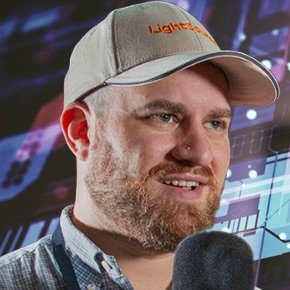
Spencer Penn joins us to share lessons from his time inside Tesla during Model 3 production hell, building autonomy at Waymo, and now founding LightSource, a venture-backed startup building the future of procurement software.
Spencer shares war stories from scaling electric vehicles when they were still a Silicon Valley punchline, what he learned from Elon Musk’s “Goldilocks seat foam obsession,” and why Tesla’s biggest competitive advantage wasn’t hardware, software, or brand—but speed.
We also dig into how Waymo quietly pulled ahead in self-driving, how startup culture can scale, and why Spencer bet his career on a broken, boring system no one had fixed since the 90s.
Links to Platforms:
Quotes from Spencer:
“It was the most fun I never want to have again.” (Describing his time at Tesla during the Model 3 production ramp)
“The Model 3 seat feel is attuned directly to Elon’s butt.”
“I’m not an Elon fanboy, but I’m also not a critic. I’m an optimist.”
“Speed wins. After seeing both Tesla and Waymo, that’s my belief.”
“We were the underdog. Eventually, it does end up feeling like you’re on the winning team.”
“You couldn’t go into a meeting with Elon and show up empty-handed.”
“This opportunity we’re pursuing at LightSource should have disappeared 20 years ago.”
“ERP is the finance system of record. What’s Salesforce in reverse? That’s LightSource.”
“The thing that surprised me: every company still runs procurement on spreadsheets and email.”
“Tesla built their own ERP system from scratch. That’s not normal.”
“There are things that are just core to the P&L of every business… and yet completely orphaned in the tech stack.”
Want to invest in early-stage startups together?
When new technologies meet the market, the world changes for the better. That's why we invest in obsessive geniuses building utopian technologies.
We write small checks to 15-20 very different startups each year. Previous investments include Aalo Atomics, Atom Limbs, Ouros Energy, Stell Engineering Airship, Terraform Industries, Longshot, Dirac, Occam (stealth), Atomic Industries. and more.
Our Website has background on the fund, our past deals, and more.
*Startup investing is risky, illiquid, and not for the faint-of-heart. Be warned.
Accredited Investors: reply to this email, and we'll get you into our deals starting this quarter.
Learn more about Spencer Penn
Additional episodes if you enjoyed:
Building a Venture Firm From Zero to One, and AI-driven VC Thesis Research
Interviewing Your Parents, Writing Through Fear, and Turning a Podcast Episode Into a Book
Episode Transcript:
Eric Jorgenson: Spencer, I always like to start off by asking a little like get-to-know-you question, which is, who are your heroes?
Spencer Penn: My heroes, that's a very good question. I mean, I think my heroes are largely musical. I think the Beatles are amazing. Since I was a kid, I've always been a huge Beatles fan, and I think they have an amazing story, and they were- they're sort of like real-world Harry Potter in a way. They were just young kids, basically, and they went to Hamburg, Germany, and they performed tens of thousands of hours in cavernous underground nightclubs. They built up this incredible talent and skill, and the next thing they knew, they were cast into a new world of wizardry, where they arrive in the United States, and they're enormously popular, and you watch the videos of their early concerts, and people were screaming their heads off, and just the amount of fervor around, and zeitgeist around that band, it's just uncanny. And I love the music. And so, I don't know, I think those were definitely some pretty serious childhood heroes. I'm curious what kind of answers people typically give to that kind of question.
Eric Jorgenson: Oh, you get all kinds of stuff. Some people are very, it's very personal to them. Sometimes, it's like a grandparent or a parent... I mean, here, a lot of entrepreneurs, a lot of technologists, some fictional characters, actually, which I also really like. Brad Feld recently said Zaphod Beeblebrox, and I was like, hell yeah, please explain. He's like this kind of partly shady, piratey, kind of semi-con artist, part genius, part idiot in Douglas Adams' Hitchhiker's Guide. So, I don't know, it's just a really fun- I find it a really interesting way to kind of see a little bit about what people value, and like in your case, it's an interesting one because not many people answer with something like totally- from an industry or a culture totally different than the one that they live in, which for you is like tech and entrepreneurship, and that's an interesting one. I like it. I like that your driving force for that was like because they went on a hero's journey, and like, I like the art they produce.
Spencer Penn: Yeah, I like the art that they produce, and I think that there's also an element of, I guess I would call it like wunderkind, wunderkindism, or something like that. Like, they were kind of not quite child prodigies, but they definitely did the Malcolm Gladwell 10,000 hours thing. You've heard this before. And so, there's this idea that you have to put in 10,000 hours in order to become an expert at something, and they had that. They were in the cauldron. I mean, they were performing 12 hours a day. They were drinking coffee and getting paid nothing, but they really tested their mettle and formed their craft, and then they were so good from all that work and that zeal, that by the time they exit the cavern, exit Hamburg, Germany, they take the world by storm because they had been in this sort of mire so long that they'd become like ultra fit to do great work. And I think there's so many examples of this where people have- where they have these sort of special communities or times in their life where they put in so much unbelievable amount of effort that they just move their craft to a level where the minute that they get exposed to the rest of the world... it just takes over. And you can even weirdly think about what's happening now with the electric vehicle world coming out of China as being very similar. I was at Tesla back in the relatively early days, and there was not a lot of competition for electric vehicles. Certainly, the ones that existed were not cool. And when I look at what's happening in China, you've got this unbelievable amount of competition between all of the different companies, whether it's BYD or NIO, and there's new ones coming up all the time, and they're coming more from the manufacturing and contract manufacturing, CM side of the world, which is really tight margins, really competitive. And so, when they finally produce a consumer product, it's an amazing amount of car for the money, and if there's not protections put in place in Europe and the United States, you'll just see people, if people are voting with their dollars, they'll just be buying these vehicles by storm. So, I don't know how- it's sort of a weird relationship to equate like the Beatles in Hamburg, Germany, with the rise of Chinese electric vehicles, but I do see some similarities. It's like the bacteria that survived in the swamp, when it gets eaten by the monkey... it's going to be COVID. You know what I mean? Like, I don't know if that's a weird analogy, but...
Eric Jorgenson: Yeah, this is an interesting, like I don't think people realize that there are hundreds, I think, I mean, you correct me, but hundreds of highly credible electric vehicle startups or companies, like scaled companies now in China, or at least dozens. There's a lot of them, and they're competing like very fiercely, and it's ramping up much, much, much faster than it is in the US.
Spencer Penn: Yeah, there are over 100 brands; that's absolutely true... But there are a few more established players than others. There's NIO, Ekang, Leapmotor, Geely, Chang'an, GAC, even there's been some new entrants, like Xiaomi, for example, which is like they released a car, and Marques Baldwin, the guy who does the tech reviews for the iPhone, like really famous YouTuber, he did a review of the Xiaomi. And I was just amazed, like a lot of it was copycatting of Tesla's features and capabilities, but a lot of it was new, and that's just really impressive. There's great innovation there and, again, great value. So... and I don't know, the relationship between that and the Beatles, I'm not really sure, I think the Beatles, there's a lot I could talk about with the Beatles, but I mean, at the end of the day, you have to love the product, and I love the product, which is their music, and I grew up on it, and I could sing you every song by heart within three notes.
Eric Jorgenson: That's very impressive. So you watched the movie Yesterday, and you're like, give me my shot, I got this.
Spencer Penn: Well, I watched the movie Yesterday, and I think that was a wonderful movie. I actually weirdly used the analogy of Yesterday, I stopped doing it because not enough people have watched that movie... but it's such a good one, and just for the audience, Yesterday is a movie where a guy gets struck by lightning or something, and he wakes up the next day, and he's in an alternative universe that's the same in every way, except for the Beatles didn't exist. And so he goes out, and he realizes that the Beatles don't exist, and he was a fledgling musician, and then he starts to become sort of a one-man Beatles and starts performing and writing all of the Beatles songs, but because they're completely new to the world, becomes the most famous celebrity songwriter in the fictional universe. I think about that the same way in our business, which is, I feel like I was hit by lightning, and then I woke up in a world where there wasn't any high-quality procurement software, and it's like the biggest area of spend in any business, yet somehow it's completely devoid of high-quality tech, and that's the mark we're trying to make. This opportunity that we're pursuing at LightSource I truly believe should have disappeared 20-30 years ago, around the same time that Salesforce got started. Salesforce is a $250 billion business, helping sales teams find customers and sell to them, it's a CRM, it's very classic software at this point, but what's Salesforce in reverse? The SRM, the Supplier Relationship Management, helping the procurement and corporate purchasing teams find vendors and buy from them more strategically, so instead of running a sales motion, you run a sourcing and procurement motion in LightSource. So, I just think next to the Salesforce tower, there should be another tower, which is the LightSource tower or whoever is able to win in this space. But the problem is, I say this related to Yesterday, I'm like, have you seen the movie Yesterday? And people are like, no, and then I have to go on the whole rant.
Eric Jorgenson: Yeah, we'll just pause this meeting, I'll pull it up, we'll just watch it, 90, 120 minutes, it’ll be a good time, and then I'll finish my metaphor. It'll be great.
Spencer Penn: We can watch it at 4x speed and get done in 30 minutes. It'll sound like the Beatles performed by the Chipmunks.
Eric Jorgenson: Yeah, might lose a little bit of its magic in some of the silence compressed. But so, I want to sort of follow you chronologically a little bit, because I think you've got some really interesting stories and experiences working in both electric and autonomy for a really long time. So, I want to kind of start with that. And I think that'll sort of lead us naturally to a little bit of a deeper dive into LightSource, which I'm also very interested in. But what sort of drew you- was it the autonomy that drew you in first? Was it the electrification that drew you in first? Like, what was your sort of entree from early career into this industry that you spent the last maybe decade plus in?
Spencer Penn: Yeah, it's a great question. When I first was interested in Tesla, I think there was a few different things that drew me. The first thing is that I think the technology was interesting. And now Tesla has been talking about autonomy for a very long time. But when I started there, really, the electrification was the main thing. And of course...
Eric Jorgenson: About when was that?
Spencer Penn: 2015. So just over a decade ago. And so, Tesla was already, I hesitate to say I was an early employee because there are people who are in the pre-500 people, that kind of thing. But by the time I got to Tesla, it was an established automaker, but it was a boutique automaker. We were making a thousand vehicles per week, and it was a rounding error for the auto space. Most of the people that I knew told me it was a big career mistake to work at Tesla, that electric cars were not going to be ever someone's main vehicle. It's just like a tech toy. It's an iPad with wheels on it. It's for tech forward suburban dentists who want to show off to their friends that they have this cool novelty toy. But I was just excited to be part of it, one, because I was early in career. It was a cool company. I liked the product. It was interesting. I liked the environmental impact. And ancient history before that, I started a company in the social entrepreneurship space back when I was in college. And one of the big learnings that I had from that experience was that if you're going to do a business with a social impact, the product has to be able to stand on its own. And so, my view is that nobody bought- do you remember Tom's shoes, those like loafers? Nobody bought those because they gave away a free pair. People bought them because they liked the shoes, and it was an extra benefit that they gave away an extra pair. There were electric vehicles that existed before Tesla, like the Nissan Leaf, for example, but they were really profoundly uncool and they were not better cars.
Eric Jorgenson: Profoundly uncool. For anybody who's never seen a Nissan Leaf, they are not- they're about the polar opposite of a Model S design wise.
Spencer Penn: Yeah. It's interesting. And so the thing I liked about Tesla was that the approach I thought was going to work, like start with something that's sexy like a sports car and a luxury car, and then eventually make a high impact mass market electric vehicle, but don't do it by telling people, hey, it's electric, so compromise on your experience, but the opposite, which is, hey, we also believe that you- that if you were to want to build- we want to build the best possible car for our customers. It just so happens to be electric. And I remember very distinctly during the onboarding process, when they had new employees joining Tesla, there was an executive who came in, and it was sort of funny, he was very charismatic, and he said, imagine if you were asked today to create a car from scratch, like if the cars never existed, just like the movie Yesterday, actually, this is a common theme. What would you do? Like you would never... if you came to the table and said, okay, what we're going to do is we're going to dig up ancient dinosaur bones. We're going to refine it down. And then we're going to put it into a thing and we're going to explode it 8,000 times per minute. And that's going to move your car forward. You'd be like, one, that's really complex and unnecessarily so, it's bad for the environment, and it makes a worse vehicle. You have to deal with fluids all the time, and you're constantly putting in gas. And so, it's like, okay, with the modern technology, where we are today as a civilization, first principles basis, which is another big Elon-ism, physics based thinking first principles, if you were to build a car today from scratch, what would it look like? And it would look a lot more like a Tesla. And so, to me, just that concept was very compelling, which is like we're going to make a great product, we're going to make the best possible product, comma, it happens to be electric. And that's how you get the impact. You can't get the environmental impact you're looking for by making a worse product. You have to let the market forces take hold. And if you align your impact with your economics, then everything will sort of work out on its own. You're not rolling your rock up a hill. So those are the kinds of things that really compelled me to Tesla, if that makes sense.
Eric Jorgenson: Yeah, absolutely. And that was an exciting time to be there. I think 2015 to 2018, that was the crazy Model 3 scale up. Like, the era known as production hell when like the big shorts were coming in, but so was like the huge public support and all of the like Model 3 pre-orders were coming in and you're trying to like get, was it the Fremont plant like up and running? And it was just, I feel like that's the period that the movie gets made about Tesla, which just must've been such a cool time.
Spencer Penn: Yeah. It was the most fun I never want to have again.
Eric Jorgenson: I believe that. I believe that. So, what are some of the things like, I don't know, I'm just endlessly fascinated by like... whatever, that's a good hook – the most fun you never want to have again. Let's go fishing for some stories from that experience. Like where were you, what was happening? Why do you never want to do it again? What was the most fun part? You're staring into the abyss for sure.
Spencer Penn: Yeah. I think that the most fun part for me was just being so early in career and having so much visibility and an undue amount of responsibility, and just frankly, exposure to like so many different areas of what ended up becoming a fortune 500 business that I don't think you get that sort of level of both boots on the ground, nuts and bolts, as well as like a really broad perspective. Like I think executives get a lot of broad perspective, but they're not always in the details. People often in the details of larger companies are quite siloed. The turnover was like, I think the average tenure when I was there was about 18 months. And so, people would come and leave the business very quickly because of the, I think, amount of demands on them. And not everyone was comfortable with just working as hard as we sort of had to and also dealing with the amount of uncertainty and change. I think that Elon's management and leadership style is definitely very distinctive, and ex post facto, nobody can claim that it hasn't worked in many ways. And so, if you are young, you find yourself with- you sometimes after six months are the most experienced person in the room. And then the second thing is if a company has a lot of turnover, very quickly, even if your network inside the company needs to be refreshed often, you end up with this incredible network at every other electric vehicle car company. And so now I have friends at Lucid and I have friends at Rivian, and I have friends at Ford, and I have friends at companies that are like Skydio or Anduril, which are not directly electric vehicles, but they're conceptually high technology products that they use a lot of the same kind of agile methodologies. And so, it's sort of a supernova – it implodes, and then the dust gets scattered all over the universe. And so, you build this great network throughout the industry, which I think doesn't happen if folks stay at the company for 30 years, that kind of thing. War stories, that's what you really were asking about. I mean, a lot of them were public. I mean, that's the thing. Like Elon sleeping on the factory floor, that is right. And there's a big question there, which is, hey, is that actually useful? And my answer is yes and no. I mean, it's not useful in that I don't think Elon was physically there to assemble cars. But I think the messaging to the team that he was in the factory, that he was going to be there until things were fixed, I think was useful in galvanizing people to improve the situation and improve the ramp. Now, if I was thinking purely utilitarian, like there's a hotel right across the street, probably would have made sense for our CEO just to stay in the hotel, get a good night's sleep and then go to the factory in the morning. But you'd see his folks fluffing a bunch of pillows and like decking out one of the conference rooms. It was not squalor. He was doing- he was fine. Other war stories I would say is that I think Elon is very directly... and by the way, I am not an Elon fanboy, but I am also not a critic. I'm what I would call an optimist. I'm an Elon advocate, but a realist, I would say. Like, I think that, like any person, he is imperfect and has his incredible, incredible strengths and also his weirdnesses and weaknesses and oddities that you kind of have to deal with. People are not divisible. There's always one complete package. Another thing that I noticed about Elon is he's really very, very into the weeds in the product. And if you wanted to get something done at Tesla, you had to go ultimately to Elon to get his approval, especially if it affected the customer's user experience of the product itself. So, he's just obsessed with the details. And one example that I remember was he wanted to make the seat foam much softer. And the way that we would do it is that we would have to actually make prototype seats with different seat foam hardnesses. And they'd have on the side shield like ‘For Elon’ written in like Sharpie on a piece of tape. And then he would come and he would sit in the seats, just like- it was like Goldilocks and the three bears. It would be like, this one's too firm. This one's too soft. This one is just right. And so, the Model 3 seat feel is attuned directly to Elon's butt. And so that's some... if you sit in the driver's seat, you are in the comfort and ergonomic preferences of Elon Musk and his what I'd say in Yiddish, his tuchus. And so his butt. And he likes a very soft seat. So, there's a lot of things where he was involved. I also think that Tesla, like the general mentality, which was pervasive, is that we had to move really fast and we had to be scrappy. And that culture would pervade the entire organization. And I mean, I can think of a million examples of times where people would say, raise their hand and say, I want to do or buy this expensive thing. And then the majority of people would say, well, is there a way we could do it cheaper? And like, I remember there was this example where we were, not to give another seat example, where we were thermocycling seat leather. And so, Tesla's very- Tesla is sort of a little bit like NeXT Computer was in a way with Steve Jobs. Have you ever heard the story of like the draft angles, like they wanted an exact 90 degree angle on the computer, and it was like way more expensive, but like that's what Steve Jobs wanted. Like Elon wanted seats that were not just white, like most car companies, when they make seats, when they say white, what they really mean is like slightly gray or beige. They don't do a true white. Elon wanted something called ultra white. He wanted the seats to be white, like a rocket ship from the future. It's crisp white. But the challenge with white fabrics is that over time, they can yellow, and they are very susceptible to staining. And so, we had to do like a lot of testing on a lot of materials to figure it out. Now, that's one part of it, which is like the specificity on product and like saying, hey, this material doesn't exist on Earth, but we should create it. Reasonable people would look at that and say, we shouldn't do that. We should focus on other things. Unreasonable people like Elon and the people who I think worked well with him look at the world and say, why can't this be and mold the world to their own preferences. But then the frugality piece came in where when we had to thermocycle this material, instead of buying like this $200,000, very expensive, specialized chamber, we would try to find a way to do it much cheaper. And it'd be like, okay, we could put it in a refer container, which is like a refrigerated shipping container. And maybe we could thermocycle the container by heating it and cooling it and get the same effect. And by the way, you thermocycle to do synthetic aging. Basically, if you heat and cool, there's an approximation of how much time that equates to in terms of, if you bake it at 350 degrees for three hours and cool it down on 60 cycles or whatever, that's equivalent to 20 years of natural aging. So, it's a loose approximation. But instead of buying the specialty equipment, people would always think about, hey, is there a cheaper and faster way for us to do it? And I think something that, especially now, being a software provider and a technologist to fortune 500 and global 2000 companies, it is probably one in ten companies that we meet with, that's even generous, where the people's mentality is, hey, we want to move fast and we want to be innovative, we want to find new solutions versus focusing on all the obstacles and why they can't be moved. So, lots of war stories there... I have a Model 3 on my desk and I keep it here a little bit for good luck as a fidget spinner. And it is a little bit PTSD inspiring. But there's so many, there’s so many times. I think that the core, if I had to draw it back to Elon as a person, is that everyone is shaped by their experience. And his experience has been that he has taken really big swings and he's taken really big bets that people have told him are bad ideas that are too hard, that are not going to work. And he's been right. And so, if that's the way that you've spent your career and people have been doubting you and then you end up persevering through grit or just correctness on your vision, then you learn very quickly not to listen to the naysayers. When people would come to him and say, hey, this is too hard or this is not possible, you couldn't come with nos. You had to come with yeses or slight alternatives, ways that you're thinking about doing it. Now, sometimes you would make a commitment and then 18 months later, it didn't deliver and then you're out of the business. But I think that there was not really very much space at Tesla for non-believers or naysayers. That kind of thing didn't fly for very long. So yeah, I don't know if that's sort of answering a bit of your question.
Eric Jorgenson: Yeah, absolutely. I mean, you used the word sort of distinctive early on in regards to the quick turnover in the leadership. Is that a result of just the pace of the organization? Is it changing direction a lot? How often is that a productive change of direction versus a counterproductive change?
Spencer Penn: Yeah. I mean, it's a good question. I think that the turnover was, if I had to sort of point to two or three things, one is that the organization itself was growing very quickly. And so just by definition, when you double the size of the company, then everybody's new. That means the tenure is low. For people departing, I think that it sort of depends. I mean, at some level, I think you have to be committed if you want to build something great. And if you're looking for a cushy job where you can clock in and clock out, you can collect the paycheck, not worry about work, Tesla and, frankly, LightSource is not the right kind of place to be.
Eric Jorgenson: Startups are hard. And they should be.
Spencer Penn: Yeah, they should be. If it was easy, then everyone would do it. It's like it's not an either or. It's like you have to have the right idea at the right timing and you have to work hard. I don't think anyone is lucky enough to hit it right without the grid on execution. I think like Elon, like in all the books and manifests, biographies about him, of course, there's this, it's widely known that he would fire people and fire them on the spot and was pretty, pretty ruthless about that sometimes. But he's just one person. So, he alone could not have enough of an impact to terminate enough people to really make the difference. Changes in direction are, they would happen often. And I think that you can either have- I think there is some- to some degree a tradeoff between speed and stability. And so, of course, you can try to get a little bit off that curve. And we made a lot of mistakes. But if you make a mistake and you can course correct and you can do it quickly, that is so much better than taking your sweet, sweet time. And then, how do you measure? You can measure- Unfortunately, you get a bias because you can measure the cost of making an overly ambitious decision around the Model 3 battery line, which was a very well-known part of the production hell that you described. There were bad decisions made. There was too much innovation too quickly. And we had to unwind a lot of that and go back to a more standard assembly approach and then layer in innovation over time. Elon on one of the earnings calls said people are underrated, humans are underrated. Very weird thing for him to say. That's sort of like a cheeky way of saying, hey, look, some of our industrial automation failed and we had to just plug the gap with people. It's not that people are underrated. It's that we just made some missteps. But when I think about the Model 3 production hell and the Model 3 ramp, like, yeah, it took longer than we'd expected. I think that a lot of suppliers were hurting because you communicate we're going to ramp at a certain speed, they planned for it. And then when you ramp at a slightly slower speed because you've had to push out your production numbers, they're just to some degree stuck holding part of the bag. And Tesla is to some degree stuck holding part of the bag. And in an alternative universe, it could have all not worked, but it did. And the company pulled through. But when I think about the pain and expenditure and waste of doing that, it's very easy to quantify how much obsolescence and wasted capex and blah, blah, blah. But how do we quantify the value of the fact that the Model 3 was brought to market in three years instead of six years, which is the automotive standard? That costs a billion or two to develop a vehicle that that was able to be sold in market three years, not just three years more, but three years earlier than competition. I feel that automakers now, 14 years later, are just now, just now instituting user experience features that were in the original Tesla Model S. I mean, it took a long time before car companies decided to put fully featured touchscreens in their vehicles. First it was like, hey, this came out, this is a bad idea. Nobody wants it. Then it was like, okay, people kind of want it, but we need to make sure we do it in a really safe, like automotive grade way. And then it's like we did a bunch of testing, and then eventually we put it into a program. Then six years later, it's launched to the market with a lot of hesitancy and whatever. And you can have your own opinions about whether screens in cars make sense, but it took a long time for other people to catch up. So, I think that what you can't- how do you quantify the value of agility and how does that weigh against the cost of churn? And I would say speed wins. That's my opinion. I think after seeing all of- both Tesla and Waymo, my belief is that speed does win.
Eric Jorgenson: Yeah, that's a great, really interesting set of stories. And we do have a bias to like over index on the quantifiable versus the unquantifiable. I'm really curious about sort of the, I think a leader somewhat creates a culture, but the culture then becomes somewhat its own system and its own self-reinforcing system. And so, I love distilling it all down to like speed and frugality or fast and scrappy or whatever kind of words you want to choose here. And I'm curious, like to what extent that... like how that got reinforced once it got outside Elon's ability to sort of personally inflict... does Tesla only let those kind of people in? Do people sort of join and then see that that's the MO, like that's how the operation works? How does it become self-reinforced inside the culture?
Spencer Penn: Yeah, it's a very good question. I think the first thing is, and this is the simplest thing, it starts from the top and just having a very clear and consistent set of company values that you espouse with all the employees and you repeat them and you write them down and you don't be afraid to email them to the entire company. Those kinds of things go a long way because then if somebody brings up a topic, you can say, hey, look, like we have to be scrappy. We have to be frugal. We have to move fast. Can we do this sooner? I think that's one way. It's like what the leaders say and how they act and what they do. The second is I think Elon was very effective in applying pressure to the system, consistent pressure to the system. And so, it's sort of like, imagine if you had a series of tubes and you want to figure out where the leaks are. The one way you do it is just blow into the tube and see where the leaks are. And if you apply a lot of pressure to the system, you find where those leaks are and you can patch them relatively quickly. And so, it's sort of funny because he was always setting the ambition like 10 yards ahead of where we could kind of get. And I think he had a really good ability to do that. Sometimes it meant we failed and we missed the mark. There's certain programs that took way longer to launch and then eventually you sort of lose faith in those timelines because you know that you always miss them and you don't want to be the long pole in the tent over- committing fully and then not being able to unwind those commitments. But it's like when we had 500 people, then it was like we're going to do the work of 2000. When we're 10,000 people, it's like, hey, we're going to have the ambition to do this in less time, at less cost, with less resources, scrappier. And by consistently setting a very high goalpost and like really holding people to account for it, you couldn't go into a meeting with Elon and show up empty handed. And I think just it's sort of one of these things like just the... I'm trying to think of a good example... you don't always get a parking ticket when your meter expires. But if you know that one in 50 times you will, you will feed the meter. And so, one in 50 times, like Elon might get really upset with you if something is not done to his sort of liking, and he will claw in, he will get involved. He looks at the details and he cares about the details. And so, I think just that lingering idea that it was out- that he is really serious about this stuff. I think there was- I don't think Tesla operated under a culture of fear by any chance. I think it was mostly excitement, but there is always a little bit of fear. You go into a conference room with him, you're presenting to him, like he's not a CEO for hire. He's not a professional general manager, everybody's best friend. I mean, he's really driven. He has a real vision and he's willing to see people leave the business if they're not delivering in the way that he would like them to or not thinking about ways, things in the way that he thinks. And so, I think that it's sort of like carrot stick and like a little bit of pressure to the organization. But it's also like motivational because once you see the company kind of doing it and winning and you celebrate those successes, then that can be very inspiring for people, because once it's like, whoa, like we actually did it, like we actually achieved some of these crazy things, like we are the underdog. And we were always thinking about how we were the underdog. Eventually it does become- it does end up feeling like you're on the winning team. And so... obviously now the stock price, long after my departure from Tesla, has absolutely skyrocketed. And so, I think that's a lagging indicator of the progress that the team was making back in 2015, 2016.
Eric Jorgenson: I'm glad you mentioned that kind of like founder versus general manager distinction, because I imagine, you transitioned straight out of Tesla and into Waymo, which I think are two of most exciting companies in the world, Waymo probably underrated relative to Tesla because it seems it just doesn't have as much craziness happening around it, frankly, and not quite the same story. And we're not sure who the founder of Waymo is. And so, the cultural shift from Tesla to Waymo is something I'm quite interested in. Like, what was that- did that feel like a splash of cold water? Did it feel like a sense of relief? Is Waymo also like really intense and we just don't hear about it that often?
Spencer Penn: I mean, Waymo is a completely different organization. It's very funny to hear you say, like we don't really know who the founder is.
Eric Jorgenson: It grew out of Google X, right, from the moonshot factory? And I'm sure somebody's in charge of it.
Spencer Penn: I mean, the founders of Waymo are, I would say, honestly, like Larry Page and Sergey Brin, the founders of Google. Because it is a project within, it was a bet within Google, and then eventually became part of Google X, and then eventually spun out into its own company. I think there's a lot of hype around Waymo, too. I mean, I don't think that it- I think it is a company that is executing really effectively. And I've been really impressed over the last year to see how quickly the company has gone from basically an R&D project to deploying effectively in one city, which is San Francisco. And I know how much just like incremental fixing and grinding through [?] it took to get it to really work. But then I thought, okay, are they going to be able to really pattern rubber stamp this across other cities? And lo and behold, actually, it has been- the scalability has actually been much better than I would have expected. And I'm really impressed by the team and their ability to add like new service areas over time with ostensibly the same technology, in spite of having to redo some of the mapping exercises. So, I think, I'm very optimistic about Waymo as well. And I'm sure that if and when they ever IPO, it'll be like a big headline. And that's what I'm hoping for personally, too. They are different organizations, though. And I've talked about this a lot, that Tesla was a very flat organization. There was not a lot of middle management. Everyone had to be working on something very core. But then the power dynamic was very vertical. Elon was the- he's the king. So, what he says goes. You’ve got to get things approved by him if you want them to be fully determined. Versus Waymo, there is a lot more levels. I mean... at Tesla, there was like two people between me and Elon. At Waymo, I think there- I can't even tell you how many people were between me and John Krafcik, who is a lovely, lovely, very capable, wonderful guy. He's a spectacular executive. He was the CEO at the time that I was there. And then he transitioned out of the business to, I think, more of a board type role. But there was a lot of levels. And I think it's just sort of a nature of Google in general and also the fact that a lot of the people at Waymo were ex-Googlers. And I think folks would look at it and say... I'm an L7 or an L8, like an esteemed person at Google. I made my career in ads or in YouTube or whatever. I got good ratings. Now I want to try something fun and have that sort of startup experience. And then you move over and you move that whole hierarchy structure, an org structure with a leveling hierarchy that's of a hundred thousand person company. And then you bring those people over to a sub-thousand person company. And I got there and I'm like, whoa, there's like a little bit too much, like this reports to this, reports to this, reports to this, reports to this. And then there wasn't as much, I think when you don't have a very clear founder vision, you end up in a position where like the roadmap, it isn't as clear, and it doesn't feel as dogmatic, like almost religious. I think Google is famously a bottoms up type organization where people have a lot of latitude and freedom to work on the kinds of things they want. In fact, you know that class, like one of the classic Google things is that you can work on 20% projects, I think it is, where outside your normal day-to-day work, you can dedicate 10 or 20% of your time to anything of interest. And I think that definitely drives a lot of innovation through just the freedom and flexibility. And so what I will say about Waymo is that it was a very hierarchical structure, but a very horizontal power dynamic. Tesla was a very horizontal org structure, very vertical power dynamics. They're almost like rotated by 90 degrees. But I think that there is a value of a lot of innovation coming from like the individual contributors who would sort of decide to some degree what they want to work on and roll it up. You get, of course, issues where like maybe two teams are kind of working on the same thing. It's not command and control. But I guess that's the question, are you willing to forego efficiency for innovation? And you'd never know when one of those really, any 10X, 1000X game changing ideas could come from a person if you just give them the breathing room to explore and roam. And that's something that you do see a lot more at Waymo, in my opinion, than Tesla, where a lot more of the sort of innovative pressure is coming from the executive side, from Elon. And then the team is just sort of trying to figure it out, and they do sometimes. Like they're under the gun and they figure it out. And it's amazing. Versus at Waymo, where it feels like people are very intrinsically motivated by the technology and given a platform to have a very comfortable life because you've got the resourcing of the greater Google. Now, there's, of course, been some stuff with Ruth Porat, who's the CFO, trying to make the organization generally more lean, especially in the bets. But for what it's worth, I mean, if you go to Waymo, you have a very, very pleasant existence.
Eric Jorgenson: Yeah, I think it'll be really interesting how the next couple of years play out. Like... I've experienced both products, like Tesla and Waymo. I've ridden in a Waymo. It's a miracle. It's alien technology. Like it's really, really, really cool. And it's one of those moments where as soon as you experience it, you're like, oh, this... there's nothing- This is better than every taxi, every Uber experience I've had aside from probably some like very unique human moments. But you can just imagine how quickly that thing can scale and how quickly costs can fall and how much safety matters. I actually looked up going into this, knowing that we're going to talk about autonomy, car accidents are a top ten cause of death for all people. And once you look at only under 55, like it is one of if not the leading cause of death. And so, like hundreds of thousands of lives will be saved as autonomy is already proving to be safer. And I think it's just like a speed of rollout thing. And the next, I don't know, I don't know if it'll be three, a two year race or a five year race or a ten year race. But like, I feel like Waymo and Tesla are basically in the starting blocks of like, they each have one or two cities, they each have a functioning autonomy, like robo taxi product or a self driving product. And we're going to get to see these two very different cultures and slightly different products and different supply chains like duke it out for market share kind of in the same way that Uber and Lyft in like 2011 to 2015. And it's going to be really like cool and interesting. I bet your seat to that race will be... I'll be curious what's going on in your brain as it plays out.
Spencer Penn: I'm glad I own shares in both. I’ll put it that way. They are both great companies, too. And I think that the other thing about Tesla is that Elon's always putting the chips back on the table. And so just when you think it's like, hey, is the EV business, is that still exciting? Is that still going to be the driver of differentiation? It's like he's already thinking about optimists and humanoid robots. And he's thinking about AI data centers...
Eric Jorgenson: And going to Mars... He's going to have a busy 10 years.
Spencer Penn: Yeah. it is exciting. And I mean... I think I would never bet against Elon. I think he met his match with the US government. That was the only thing that I think he came up against where he couldn't quite have the authority or staying power to really push through to his agenda. But I'm also very excited about Waymo. And I think they've been doing a great job. I think the marketing has been on fire. The growth rate of Waymo in San Francisco has, earlier this year, last year, it surpassed Lyft in terms of the number of rides in the marketplace, which was shocking. And I'm sure it's on track to surpass Uber at some point as well. Like at Waymo, it was sort of interesting, like everybody understood that the biggest challenge was not whether or not the product had market viability. It was just, can you build it? Because it is science fiction. But it was clear if you build it, like, of course, people will use it. Of course, this is a good idea. Versus with electric vehicles, it was a little bit more like, are people going to want this? Like, is this the right product? ...Is it better enough? And the answer ended up being yes. But I think, a lot of companies, they either have product market fit risk or they have technical risk or they have both. I think Waymo’s was a technical risk. And I think it was really expensive to do what they did and to be the first. And I think that something that surprised me about the market has been 10 years ago, there were so many startups and companies doing self-driving, whether it was Cruise or Chris Urmson's business. There's a few, like Wave in the UK. I would have expected... auto in trucking, which was acquired by Uber. So, Uber became Uber Freight and Uber self-driving eventually got shut down. Lyft had Lyft Level 5. What surprised me is of all the billions of dollars spent on self-driving, there's only one company that I see today that's really delivering. And that's Waymo. And then I think Tesla is delivering on like driver assist on their passenger vehicles. And they're trying to get into the ride share space. And I think they will do it eventually, because I believe in the people at Tesla and their abilities.
Eric Jorgenson: It seems like that corner is just being turned, depending on who you ask and what version of full self-driving they use. And like I'm seeing early sort of indicators that like that's there. And Tesla has been claiming it's there for a long time, so it's hard to know for sure. But yeah, it'll be really cool. That's one of those things that like it'd be hard to bet against that being really pervasive in 10 years, and if we did, it'd be, I think, just a huge regulatory failure.
Spencer Penn: Yeah, I think that makes a lot of sense.
Eric Jorgenson: So, I really want to ask another question about this technical risk, because I think that's interesting. Like you're at Waymo. How does the culture sort of, like a large group of people deal with the ambiguity that like the thing that we are all working on, that the core hope that this business is built on may or may not actually be possible? Like that is a big, heavy thing.
Spencer Penn: Yeah, it is interesting. I think that people knew it was possible. And I think there was a very- I think that self-driving actually had a bit of an overoptimistic false start. And what I mean by that is that what really kicked off the Google self-driving car program was the DARPA Grand Prix and the DARPA Grand Challenge. So, DARPA, Defense Advanced Research Projects Administration, I think, is what it is. They're a government agency, association. But anyway, alliance. Arepas, delicious defense, delicious defense tortillas and more. So, they'll do these competitions and they'll say, okay, what's a competition where we can push people in a fun way and fund them, universities and public company research organizations, to attempt to solve a technology challenge that may have a defense application. And one of those was self-driving. They first did a grand challenge, which was like I can't remember Grand Prix or Grand Challenge. They did one that was in the desert. It was like, can you self-drive a car through a course in the desert, off road, that kind of thing. And then it was a few years later, a fake urban environment where it's like, can we have a car drive in a city? And the results from that was that there were teams that completed it and finished successfully. And it was very, very early on the self-driving and autonomy side. And I think that gave people a lot of hope that, whoa, if it can do it in this closed circuit environment, why can it not do it in a city? And so, I think there was this perception in 2009, 2013, 2014, 2015, that we were basically there. Maybe we just needed to close a small gap. But then I think that was the vibe when I was at Waymo, like we actually were finally doing full driverless, like self-driven ride share. But people who had been there for like six years were like, ah, it's been like two years away for like a long time. And I think it's that classic 80-20 rule, which is that you can get 80% of the way with 20% of the effort. Like you and I could go into a garage and hack together a self-driving car that can do basic stuff and look kind of impressive in like a weekend. But then to say, okay, now we want to make it reliable and build a system and build a riderless service on top of it with the right safeties, the right fallbacks, the right rider support, dealing with all the times of day, all the weather conditions, all the other kinds of weird vehicles and pedestrians, have a way to prove, not just put the car on the road, but prove that the car is safe before putting it on the road. So that's where the real devil's in the details. And so, I think that people really understood at Waymo that the technical risk was real, but that it was possible to solve. It was not like totally hypothetical. And I think part of the way that the company solved it was by breaking down the problem into a bunch of different areas. And so, you had a different team working on perception, which is just, let's take the sensor data and let's identify people, cars, bicycles, and that's all we're going to do and we're going to do it really well. A different team building the sensors. We're going to make really great LiDAR. They're going to be on top of the car. Hey, it's not my domain to know what happens with that data necessarily. Then there's a different group that works on just planning, which is how the vehicle plans its route and drives itself. A different group works on just mapping. And so, no one organization, except for obviously at the exec level, was responsible for the full system. But people had to work on the performance of their own respective areas. And so, when you break it down into a smaller problem and you sort of know what good looks like, eventually you get to a system that you can actually measure and build incrementally. And I've had a lot of debates about this with people at Waymo over the years about, hey, we've broken up the problem so much. Are we missing something between the lines? Because there are some companies like Wave in London where their approach is, we're not going to have all these different systems. We're going to have sensor input, a huge, big-ass model, and then driving outputs. And we're just going to use data and big models, sort of like an LLM, where it's not like, hey, we have a language model for this, this, this, this, this. It's like one really big model. And I think one of the big shifts in the last five years or so has been, I think, that the cardinal rule of machine learning has been that the more we try to tell the model what to do, the worse the outcome is. What we should instead do is make the model really big, really flexible, give it a lot of data, and give it a general goal state that it can work towards. And then you can train something that is more robust to a much larger level of scenarios and stuff like that. And could you apply that same logic to self-driving? Yes, except for the fact that you want it to be procedural at some degree. You don't want any hallucinations. You want to be able to measure and do what's called regression testing throughout the life cycle of the product. And so, the approach that Waymo took was a very technically sound one, and it has proven to be correct, I think, at least given the technology that was available at the time five years ago when we were building it.
Eric Jorgenson: So, you saw all this at Tesla and all this at Waymo, and you said, screw this, I'm starting a software company.
Spencer Penn: This is too hard. No, I mean, I think that I loved working at Waymo and it was my dream job for a long time. I remember I was first rejected from Waymo when I was in grad school. Well, it wasn't even called Waymo then. It was called Google Self-Driving Car Program. And so, I worked my behind off and then eventually had an opportunity to be there. And I would have nothing more than to just be part of this all-you-can-eat buffet of incredible technologists, engineering talent, innovation, without all of the stressors or pain of being at a company like a Tesla, which, again, I loved, but the most fun I didn't want to have again. But there was this idea that I had, and I'd had since business school, that I really wanted to build a procurement software business. I just felt like this opportunity existed. I knew that when I was at Tesla, there was not really anything good out there in market.
Eric Jorgenson: They built their own whole internal tool for this, right... exactly because there wasn't a tool for it?
Spencer Penn: Yeah, Tesla built their entire ERP system from scratch. And so, it's a bizarre thing. It's a very unusual, a very unusual thing to do. Tesla built, had an internal tech team that built their own ERP. This is publicly known. It's called Warp Drive. It started out really bad. It ended up being much better. And you do, you sort of like identify this as a problem, which is like, okay, like, hey, look... sourcing and procurement are not well-served within Tesla. It was a lot of spreadsheets and emails. I looked out on the market and saw that there wasn't anything available that did the work super effectively. And then I left it there. I didn't think about it again. Then I was in business school, did my MBA. So that's a little part of the history. I went to Harvard Business School, which I would highly recommend. I loved being there. I just had one of our milestone reunions in May. And basically, I started thinking about this more, and I think at Tesla, it's not always clear, is this a Tesla problem or is this a bigger universal problem? And my assumption was that Tesla was just like an overgrown toddler, and it wasn't doing things well and that other companies had solved this. And then what really changed in my mentality was that when I was in business school and I sort of used procurement as fodder for some final projects and like a startup bootcamp type course, I kind of started talking to other companies and other industries and realized, wait a second, like it's not just Tesla. It's like every single company is managing all of their procurement and sourcing through spreadsheets and emails. And they have the engineering system, which is the CAD files, the PLM, that kind of stuff. And then the ERP is the finance system of record for doing payments, creating purchase orders. But that's just the finance system. How do we decide, do we have the right design? How do we interact with suppliers on that design? How do we find suppliers? How do we communicate with them? How do we share drawings? How do we negotiate pricing? How do we track our bill of materials? And there were so many things that I felt were just activities that were not just like core to the P&L of every major business, but were completely orphaned within the tech landscapes of all of these businesses with no hope of being addressed. And so, at a certain moment, it wasn't that I left Waymo. It was that the opportunity to build LightSource was so obvious to me and so pressing. And all the pieces of the puzzle lined up. I had a great co-founder that I adored. We had funding interest from great investors. We never had to go out and pitch. We had customers that were ready to sign up if we could build at least an MVP of what we had promised. And we had started doing some of that stuff. And all those things came together and it was like, okay. And now we've expanded far beyond, frankly, even the kind of scope that I had even seen at Tesla, because we have tons of customers, we have tons of different use cases. And so, it's not just about sourcing anymore. It's a full digital ecosystem for all things related to direct material supply management. And I don't mean supply chain, like logistics tracking, like managing your suppliers and the supply of goods that they are sending to you that you're negotiating and you're pricing. And it helps you bring products to market faster and structurally reduce the cost of your build of material. So, the two big things that we care about at Tesla, reducing costs and doing things faster, the software really, really helps you do that. It's built in from day one and great benefit. We were built in... we were founded in 2021 and AI was just picking up. And so, we are the first AI native business really doing this and addressing a wholly under-addressed problem.
Eric Jorgenson: Yeah, it's a really interesting time to be starting a software company, that I feel like you can build your organization around the sort of AI software development workflow in a way that other people may have a hard time adapting to. The moats around small tools are going away quickly, but I think the moats around like big, complex enterprise are actually going up because, just because you can build this software like doesn't mean you can get the installation, doesn't mean you can solve the network problem, doesn't mean you can build up all of these capabilities. I mean, from that list you rattled off, and this is not my area of expertise, but like there's a lot going on in there, which it might've been tens of millions to develop this level of software 10 years ago, but now you can actually like get there iteratively with a more reasonable team for each stage and tackle like much bigger problems.
Spencer Penn: Yep, absolutely. I couldn't agree with you more.
Eric Jorgenson: All right, Spencer, thank you so much for taking the time, teaching us all these things, sharing your incredibly unique experience. I'm really excited to follow LightSource and see everything that you're doing here and see the problems that get solved. Is there anywhere you would send people who want to like read more about you, follow LightSource, anything you want to like shout out or direct people to? I know you’ve got quite a LinkedIn presence and like share a lot there.
Spencer Penn: Yeah, absolutely. I'm always happy to connect with folks on LinkedIn. Just reach out to me and say hello and tell me that you connected with some of our ideas through Eric's podcast. Folks can also go and check out our actual website, lightsource.ai. We work with a range of fortune 500 businesses. They find a ton of value through bringing AI to their procurement and specifically the direct materials teams. So, thank you, Eric, so much for having me on the podcast. It was a real joy, very energizing.
Eric Jorgenson: Awesome. Thanks for sharing. Thanks for giving me the Beatles lesson. Talk to you later.
Spencer Penn: All right. Talk soon.