The Next Renaissance, AI Reality vs Hype, and a Movement of Hope with Zack Kass
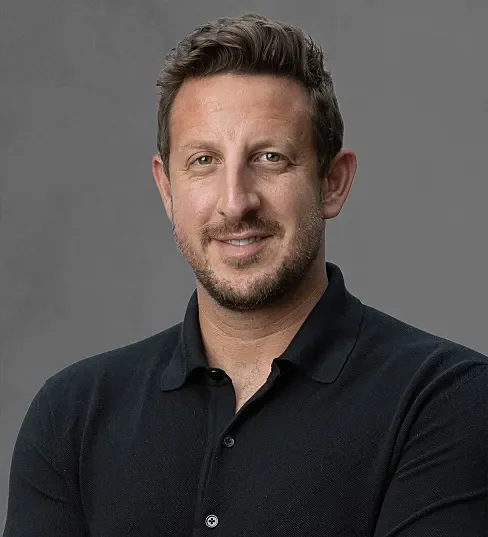
This week’s episode is about something we are not hearing enough of right now: hope.
Zack Kass, former Head of Go-To-Market at OpenAI, joins us to translate the AI moment for normal humans, outside the Bay Area echo chamber. Zack wrote his book for his mom, for book clubs, and for anyone trying to make sense of what comes next.
We explore his optimism around AI, why he believes humanity is entering a new era where we unlock breakthroughs in science, while also pushing people back toward deeper human connection
Along the way, we dig into the societal forces that slow down technological change, the future of work, and why local communities may matter more than national politics in the decades ahead.
Links to Platforms:
Quotes from Zack:
“I didn’t write this book for any of my former OpenAI colleagues… I wrote it for my mom.”
“Not enough is being done to help explain the moment to everyone else.”
“People are really tired of hating. They don’t want another enemy."
“If intelligence is a resource and that resource declines in cost, then what?”
“Technological thresholds ask what a machine can do. Societal thresholds ask what we want it to do.”
“We have exceptional tolerance for human failure and none for machine failure.”
“Most people have no idea how far technological thresholds have moved.”
“The reality is they may find themselves automated because no one is protecting them.”
“I think humans are going to see the value of AI in curing disease before anything else.”

Want to invest in early-stage startups together?
When new technologies meet the market, the world changes for the better. That's why we invest in obsessive geniuses building utopian technologies.
We write small checks to 15-20 very different startups each year. Previous investments include Aalo Atomics, Atom Limbs, Ouros Energy, Stell Engineering Airship, Terraform Industries, Longshot, Dirac, Occam (stealth), Atomic Industries. and more.
Our Website has background on the fund, our past deals, and more.
*Startup investing is risky, illiquid, and not for the faint-of-heart. Be warned.
Accredited Investors: reply to this email, and we'll get you into our deals starting this quarter.
Learn more about Zack Kass
Additional episodes if you enjoyed:
The Magic of Code, History of Computing, and the Future of AI Interfaces [Sam Arbesman #2]
Building a Venture Firm From Zero to One, and AI-driven VC Thesis Research
Episode Transcript:
Eric Jorgenson: I was actually thinking as I was getting ready for this interview that I'm relatively well suited and I think you are, too, to kind of be this tech for middle America translator, working deeply in the tech world enough but having enough friends, family, and roots in normal humans that you don't just suddenly only speak San Francisco and become unintelligible to everyone else in the world. It's a huge advantage.
Zack Kass: That's why I wrote the book... And the thing I keep coming back to, like people are like... Have you heard from Sam? And I'm like, well, amazingly, he did send a nice note. I don't know if you read it, but like, yeah, he was really supportive. But also, I didn't write this book for any of my former OpenAI colleagues and friends. Like, I didn't. I wrote it for my mom, who represents a well-educated woman in Santa Barbara. And then there's like- I mean, dude, here, let me send you this. The viewers- Actually, I don't know if the viewers can see it, but you can put this photo up. This photo was sent to me two days ago. It is one of my prized possessions now. You have no idea... Okay, yeah, so let me, I'll share this. I can share this. I can share this photo. Is this right? Yeah, okay. This photo is now a prized possession. Presentation? What do I want? Screen? I'm clicking presentation, but that doesn't want to share. Okay, here it is... Can you see this photo? Can you see this, or is it just showing... It's probably showing my...
Eric Jorgenson: I can see your messages app.
Zack Kass: Yeah, it's the photo that we want. All right, you're going to have to edit this... Well, I [inaudible]. But bummer. Why won't it show? Here, I'll just do entire screen. I don't care. Okay, this is a photo. You can see this, right?
Eric Jorgenson: I see Zoom.
Zack Kass: Oh, I know why. I know why. I know why. I have this double monitor problem that's insane. You guys do editing, right?
Eric Jorgenson: Oh, yeah.
Zack Kass: So this photo has become a prized possession. This is a group of women in Napa, California, and I get a bunch of these now, but this is as cool as it gets. And I'll explain why. This is a group of women in Napa, California, who got the book early. One of them had a son who saw me at a conference, told his mom, hey, I think... if there's a chance that you're going to get into AI in a way that doesn't terrify you, this is the guy who's going to do it. Tells his mom. His mom buys a book, then convinces her book club that actually what we should do is buy this book for the entire book club. And they sent me a note. They got ahold of me and sent me a note. Dear Zack, we all agree the next Renaissance is a must read. Congratulations to you on an undertaking exceptionally done. I was especially impressed and touched by your kind words about your wife and parents. Then she explained, this is a group of retired women. One of them, the one, the second to the left, is the first female judge in Napa County, and another is a president of a small university in Pittsburgh. And I was like, yeah... I mean, you know what, if I only wrote this book for this group of women, like that's enough. And so like, what I realized is, after all these articles gain all this memetic traction in our circles, and obviously some of them outside our circles, so much of what is being neglected, and I think so much of the unrest, intellectual unrest, comes from the fact that no one, well, not enough is being done to help explain the moment to everyone else. And this is... Anyway, this is why I wrote the book. I mean, very, very clearly, this is what it's for.
Eric Jorgenson: That's so awesome. This leads me back to my traditional opening question, which is, who are some of your personal heroes?
Zack Kass: I mean, so I have a long- I guess I have a long list. And I'll try to be- I'll pick some simple ones. So, my dad is by far probably my greatest hero for reasons that I actually explained in the book, but also for reasons that aren't explained there. He represents, I think, a lot of what every parent wants for their child but is too afraid to actually support. He grew up in a- He grew up fairly lower middle class family in Philadelphia. His parents had this acrimonious divorce, and he never really saw what love looked like in his own household and constantly sought it in his friend's parents and like tried to figure out how he could mimic a loving relationship. And then went to law school after college, went and studied Russian lit and engineering at Cornell, went to law school after college thinking he wanted to be a lawyer, because that's what he should do, practiced law for two years and realized he didn't want to do that at all and went and helped a guy named Tom Downey, who's now quite- he was a five term congressman and the youngest congressman ever in the history of the United States for a while, get elected in New York during the Nixon scandal. And then said, you know what, I don't want to be in politics either and went back to med school. Except he couldn't go to med school first. He had to go get a master's in public policy to get the pre reqs in order to go to med school. So went to Harvard School of Public Policy for a couple of years, then went to med school, then became an oncologist. So graduated med school at like- finished his residency at like 41, saddled with debt, and met my mom during his residency. They had- or met my mom during his fellowship. They moved to Santa Barbara where he dedicated his life originally to cancer medicine but also to AIDS, and terrifying infectious disease, because at the time in ’90, no- infectious disease didn't even want to help people with HIV and AIDs. And so has sort of like always done the thing that was very hard that like served him deeply or the community deeply and then has gone on to become this very acclaimed oncologist principally because he's courageous and compassionate, which I write about in the book, if you got to that part. One of my heroes is my first volleyball coach, Jon Lee, who helped young men see the purpose of the measure of a man through a sport, a sport that is, sort of laughably and famously effeminate. Jon Lee made it a manly sport and helped a lot of men. He has coached four Olympians for context. And actually, that's probably not true. I think he's now coached six Olympians and he's coached two gold medal winners in high school and helped young men, many of them like me, lost, find purpose and identity in a sport that had no acclaim. There was nothing about volleyball. He didn't promise you that you'd be famous. He didn't promise you that you'd make money. He didn't even promise you that you'd be good at volleyball. He promised you that you would find purpose with your teammates and that that was enough, that like the measure of- and for a high schooler and when you're influenced by all sorts of legends and you could be playing other sports that people actually care about, it meant a ton to me. And then... I write about people like John Maynard Keynes and Rudolph Steiner who don't get enough credit. We have these living luminaries like Ray Kurzweil, people who wrote about things that didn't even make sense to anyone that now look sort of [?]. Although I don't agree with Ray's conclusions, I think it's remarkable how well he saw the future so early. But if you go back far enough, you find, you discover people like Rudolph Steiner and John Maynard Keynes who were brilliant in ways that like would only be found out hundreds of years later. And in the case of Steiner, he basically said, hey, industrial education is destroying the soul and spirit of the child. In the case of John Maynard Keynes, he was like, hey, automation is actually going to drive all these efficiencies which are going to solve a bunch of economic problems and then we're really going to be faced with it. Like making the argument that actually starvation, that solving for caring, feeding, housing everyone wasn't the hardest thing humans were going to do. And so, I'm like impressed by people who help those find purpose, I'm impressed by people who pursue their passions, and I'm impressed by people who are willing to say very hard things that can be very unpopular that look very clear to them.
Eric Jorgenson: That's an amazing summary, and I like that question because it tends to give people a really good sense of your mission when you set out to do things. I think having said that, you can see that in all of your work. I see in your book a deep, compassionate, caring for humans close to you and humanity in general. I see like a reverence for prescience and the ability, like combining those, you work really hard to just help everybody, normal people, like see around this corner and navigate this tough transition that we're all going through together.
Zack Kass: Thanks. That's the goal. And I think I should clarify because I was thinking about this the other day. Prescience to me is, I think a lot of people are impressed by prescience because of the brilliance. I'm impressed by prescience because of the courage. You and I have at some time or another had some incredible idea that could have made us a billion dollars. We just didn't do anything about it. And then someone built the company that we probably thought- everyone at some point has thought of a company they could have built and done quite well with. It's the courage to actually put to writing or to say the things that don't look obvious. And we reward prescience financially in interesting ways, but we often don't reward cultural prescience. But I also really think it's important because so much of our zeitgeist revolves around sort of memetic fear and pop culture, but not vision. Like not... leaders don't get elected anymore on their vision for the country or their vision for the world. Local politicians don't get elected on their vision for their community. And we- I really wish we would reward people who aren't even right but are willing to just be directionally accurate and put a stake in the ground further out than they- plant the seeds for trees under which you may never receive shade. Like there's so much opportunity right now to start talking about these other, these imminent solutions to problems. You couldn't have talked about the solutions to the problems that we faced in 1900 with any seriousness. I mean, it is just like, you know that you're going to live and die and not see most of your problems get solved. We don't know that anymore. We actually could start talking in very serious ways that I just don't think we are rewarding.
Eric Jorgenson: So you're on an amazing streak of speaking as this book has come out. And I know first and secondhand that what you are saying is like resonating deeply with people. Like it is not common to get a standing ovation at a like business conference, and you're getting them. What is the- what do you think is resonating? Like what is the thing that feels unique about your approach to AI in particular that seems to just be lighting people up?
Zack Kass: Good storytelling. I mean, I'm a good storyteller and I worked on this a lot. But more importantly, it's a message that people have been so eager to hear for so long, and it's told, I deliver it not as an oracle, but almost as a narrator. Like, my job on stage is not to be larger than life. And in fact, I think I work well because I have a degree of vulnerability and humility that I'm willing to be pretty self disparaging and I'm willing to say I don't know all the time. I'm also willing to point at all the things that are broken and say, yeah, those are really bad. But what a lot of people are able to do, if you give them the space, is to start doing some historical analysis. And like, one of the questions that I ask in the book that I ask everyone on stage is, what day would you rather be born? And it's very hard to arrive at a day other than today. And there's a good reason for that. Humans do things better little by little and sometimes a lot by a lot. Now, we regress in other ways, and you have to acknowledge all these things. But we usually fix those things, and increasingly we're fixing them faster, which is a remarkable thing. The other reason I think people do this is because they are- The other reason people stand and clap is because they are really tired of hating. I see a very different- I go out into the world, and I'm filled with energy all the time by the people I meet and what I observe and what I see. And you live in Kansas City. And I go to places like Kansas City, and I go to restaurants and bars. People take pride in their work still. People are proud of the places they live, even if the coastal elites don't think they should be. People want to host. People want to commune. People want to care. We haven't lost any of those things. And actually, we're pining for them even more as social media ravages our brain and the screen addiction ravages our brain, and people are really eager. I think I tell people, I think I am witness to a movement of hope. Like I think I am witness right now to, I don't know how long it'll take, but I think I'm watching what happens if you give people a reason to be hopeful, which, by the way, there are plenty of them. We just don't seek them out. And I think I told you, Jonathan Haidt, in my opinion, has done God's work in figuring out how to go to war with social media. And he did it, the author of Anxious Generation for Station Identification, he did it by going to the school districts and saying to the school districts, the parents in the school districts, you should hate Mark Zuckerberg and Meta and gave every parent someone to hate, gave them a thing to attack. And they've done it, and they've done really well. I mean, they're winning all these incredible legal battles to ban phones in schools and to set social media legislation in nations. But what he hasn't done, in part because I'm not sure it's within him, is to tell people who to love. The Jonathan Haidt message is, here's the bad man, here's- And again, I have to give him all the flowers. He's done exceptional work to reverse a lot of- well, to fix some things that were very broken. I don't know how you reverse some of this damage. But now parents are like, okay, cool, we ban the phones. Now what? Now what? And it's like, well, now we got to return outdoors. Now we got to build the physical spaces that we love. Now we got to start challenging each other to find- to actually build renewed civic duty and reopen these doors that we've closed. That is the thing that people really deeply want. They don't want another enemy anymore. They just are tired of fighting someone else. They want to know what to love.
Eric Jorgenson: Yeah, it feels so much better to love than to hate. But it's so much cheaper to incite hatred in someone than love. And it's just, yeah, it's a very interesting thing. And so, I like... AI is a movement of hope. And one of your prognoses for thriving in the era of AI, the number one is go outside and return to some of these humanistic qualities. And yeah, I think it's a very- my vision of the future, which is this sort of solar punk utopia that guides all of my writing and investing and delusional daydreaming, is this like ever more perfect symbiosis between our understanding of ourselves as like biological creatures and embracing all of the massive, unbelievable advantages of technology. I feel like cyberpunk goes way too far in like everything's a machine, everything's metal, it's all dark and neon. And a solar punk future is like, look, we're never going to beat our biology in terms of like hugging is never going to not feel great. Dinner with friends is never going to not feel great. Going to a church and like hearing music is never going to not feel great. Gardening, put your hands in the dirt, go out in the sun. Like, you have to honor that part of yourself in order to actually make the most of your biology. But at the same time, yeah, let's get some robot servants. Let's get some self-driving cars. Let's minimize traffic accidents. Let's extend lifespans. Let's unleash technology to do all the good that it can so that we can really lean into our biological selves.
Zack Kass: Yeah, biological and spiritual selves. I mean, I say it over and over, but I'm like, you want to know why I'm hopeful, because no matter what we have introduced into this world, the happiness studies have not changed, as long as we've done happiness studies, and the longest running one was the Harvard Happiness Study, which took 80 years. But there are dozens of happiness studies, and they all arrive at the exact same conclusion. And I don't even have to tell you, like I don't have to tell anyone... We hold this truth to be self evident that all men and women deeply want time with friends and family and physical community, ideally outside, places of worship, and around dining room tables. And when people die, what they say is, I wish I had done that more. Nothing else. Nothing else. And when people die, what do they want? They want their loved ones near them. They don't want watches. They don't want gold. They just want- And they don't care about status. Everyone is reduced to the same biological, as you point, chemical, spiritual self. We just want to be around the people we love. And we in the process have added a bunch of other things. And I do think there's- this idea of purpose is super important and meaning is super important. But I remind everyone that those things have taken different shapes and flavors over time. Purpose and meaning had different shape when we were hunter gatherers. They had different shape when we were pre agriculture, agriculture, post ag, industrial. They have different shapes today. Status has taken different shapes. Happiness has not. It just has not. And so, I come back to this very comfortable realization that you just pointed out. I want to say something because I was thinking about- So I used to watch all the dystopian movies because I wanted to see what everyone was going to be talking about. Then I stopped. I was like, I can't do this anymore. This is just, this is garbage. But then I started watching them again because I realized I could watch them with a new angle, and I'll explain why. Most dystopian movies have a terrible fundamental- They have a really beautiful truth and they have a terrible fundamental flaw. First, the beautiful truth. The beautiful truth of every dystopian film is that you recognize it as dystopian. This is my favorite. So Blade Runner. Blade Runner. Why do we all- the famous dystopian elements of Blade Runner are it's a savage, brutal world with machines beyond our comprehension, but loveless. And famously or infamously, our protagonist is in love with a robot, who is broadcast sort of everywhere. And he's in love with this artificial creature. He's miserable. He is miserable because she is not real. And he knows in his heart that this is not a loveless relationship. This is a soulless bot. Joaquin Phoenix’s Her. Joaquin Phoenix, at the end- I don't want to- I'll spoil Her. Doesn't matter.
Eric Jorgenson: It's like a 15 year old movie. It's fine.
Zack Kass: At the end of... I haven't seen it in a while... At the end of Joaquin Phoenix’s Her, he discovers that he's in love with a woman that has thousands of husbands. And he is heartbroken. A true- You want to know the most dystopian way to have written Her? Joaquin Phoenix discovers he's in love with a robot and doesn't care. That is actual dystopia. Actual dystopia is rewiring of the human brain to forget that we need each other, to replace human connection with robotic connection. That is dystopian. Presumably, and the way Her is left to feel very haunting, I'm left with Her being like, oh, okay, so everyone's going to realize they want human connection and they're going to go off and try to find humans again. And we watch this in real time. We watch a bunch of gen Z spend 13 hours a day on their phone, scroll social media endlessly. And we go, oh my God, it's over. And I go, they're miserable... I mean, I take no solace in this, but I'm like, this isn't going to work, guys. Like, this party is going to come to an end. These kids do want out. They want out bad. Gen Alpha is already using social media, I think it's like multiple standard deviations less per day. They're already like, no, not that, please, no. So I'm like, okay, we're already returning to some degree of our happiness function. The other thing that I find really funny about all these dystopian films is, and you pointed this out, they can imagine this future that's like really fucked up in these like really ridiculous ways. But the consequences of solving some of the things that are really fucked up would have inevitably produced all these other solutions. Like Wall-E. I take the most issue with Wall-E. I love Wall-E. It's a great film. But... it's a beautiful film and... it's just like... I mean, the protagonist is an exceptionally kind character that you feel for. But Wall-E depicts a world where we have solved flying cars and space travel, but everyone somehow is still fat. And I'm like, that's not how this is going to go, guys. If we solve flying cars and space travel, everyone's going to be hot as shit. Like everyone... we're going to have other issues... you could have imagined a lot of issues, but being morbidly obese and lazy probably isn't going to be one of them. I mean, it's just like you're going to fix a bunch of other stuff if you solve these things. Maybe we have piles of trash, but I also don't see how that works. And so, this is where I go back and look at these dystopian films, and I go, people are so, so specific in their idea of dystopia, but actually it's far more nuanced than this. Anyway.
Eric Jorgenson: Yeah, I love this. Okay, so picking apart Wall-E is actually a good sort of transition to the prognosis for the next, like pick your time span that you like, whether it's five years or ten years or 25 years.
Zack Kass: What are you- You're the solar punk fanatic. What timescale do you fantasize on?
Eric Jorgenson: I think in five and 25, basically. I really like imagining 2050 because as I look at what are the most dominant companies in the world today, they were all kind of like they existed but they weren't obvious 25 years ago. Google and Microsoft and Tesla, SpaceX, these are all sort of like very central today, but they were just emerging around that era. And so, I think in terms of like what are the mega cap category defining companies of the 2050s, and then just like for five years just for like career positioning, I feel like part of this is the moral panic of like, how do I live my life? How do I make tradeoffs? How do I allocate assets? How do I- the near term is almost always fearful, I find, with discussions about AI, and a lot of your book and your talks are an amazing antidote to that, which is- and you're among the best informed people in the world on this, frankly. So, when you come optimistic about the next five years even for some of the things that people are most concerned about, which is like job loss or identity crisis, I think that's an amazing place to kind of drill in.
Zack Kass: Okay, let's do it.
Eric Jorgenson: Sorry, that was a very long question. Let's start with five years. What is going to happen over the next five years, in your estimation, knowing that we are kind of feeling at like a household level these breakout AI tools that seem like they're changing week by week?
ZACK KASS: Well, I do think we should – here, I’ll fix this – I do think we should, we should acknowledge that something definitely did change in the research in December. And Andrej Karpathy tweeted about this the other day, and he was like, it's the decade of agents. And then he was like, oh, maybe it's the year of agents... What I try to do when I answer this question is first sort of acknowledge that the science is moving so fast. And one of the problems in explaining the future vis-a-vis AI to people not in AI and even some people in AI, honestly, is that there is such a transfixion on the app, AI the product, and not enough on AI as unmetered intelligence, AI as infrastructure, which is how I try to frame it in the book. Like Chat GPT, and I should have wrote this in the book. I only thought of this analogy later. And it's so simple. I don't know why it took me this long. But I explain Chat GPT as Chat GPT is to AI as the light bulb was to electricity. You could stare at this thing. And a lot of people did. They're like, that's electricity. Now I understand electricity. Well, we are powering a light bulb, which is super important to you today. It's super important. It's going to replace lamps and it's going to let you do a bunch of work that you couldn't previously do. But it's one thing that electricity is going to serve. And those who saw that built factories and built other stuff that was going to later be served by electricity. Those transfixed by the light bulb, went and they were like, oh, this is how my job- I'm going to be able to work late now. What does that mean? So framing AI as infrastructure is pretty important for everyone. And I frame it as unmetered intelligence. So it's intelligence as a resource, just like water, foodstuffs, electricity and the internet, a scarce resource that then becomes eventually free, or not free. Nothing's free. Unmetered... If I come over to your house, I turn on the water, you're not going to Venmo me. When I talk about it that way, it helps me and other people think about, okay, well, what does that do? And it's the easiest way that I know how to equip anyone with the tools to think about their own future, because this is really what I see my job as, not telling someone where we're going, giving them the tools to think about it themselves. If intelligence is a resource and that resource declines in cost, then what? Then what?
Eric Jorgenson: You consume more of it.
Zack Kass: You consume more of it. And critically, your intelligence becomes, on a relative basis, perhaps less valuable, then what are the other things that you should, and what are all the industries that are affected by it? What's interesting is then I say, okay, but now we need to go and do something else, which is we need to acknowledge that not every technology is adopted at the rate at which it is developed. And in fact, very few are. Very, very, very few are. And the best, [?] examples. But what I describe a world of what I call societal thresholds. Technological thresholds ask the question, what can a machine do? And societal threshold asks the question, what do we want a machine to do? Societal thresholds do not move in lock step and actually often move well out of it. There is an incredible gap, often what we call the adoption gap, between what a technology can do, what we want it to do. Nuclear power is a famous recent example. We discovered nuclear power in the 50s, we build a bunch of it, and then we just stop and we say, no more nuclear power. And why don't we have abundant energy today? It's because we decided on a policy basis we didn't want it. Many such examples, the autonomous vehicle we studied.
Eric Jorgenson: The one I love the most, I just wrote an essay about this, so it's fresh, is the elevator button. But like, everybody knows that there was a period of time where we had elevator operators when we didn't really need them. But do you know how long that period was? 70 years. And it wasn't until there was a strike of elevator operators that the building owners were finally like, fuck this, we're automating you and...
Zack Kass: Did you read this part of the book?
Eric Jorgenson: I read the whole book.
Zack Kass: Oh... didn't we write about... Did I not write about elevators in the book? Maybe I didn't. Okay, let me tell the elevator story because I love this one.
Eric Jorgenson: Please.
Zack Kass: The elevator story gets even better than the button, Eric. When Otis, Elisha Otis discovers the modern or invents the modern people mover, he starts selling in 1854, 1853, he starts selling a bunch to tall buildings, and they buy these elevators. And by 1855, they've all called up and said, hey, no one's riding the elevator. We actually want to- A building famously asked if they could return their elevator. And Elisha’s like, no, you can't return your elevator. But now I have a huge problem because I have- Sales have stopped, and the feedback is everyone's still afraid they're going to die. Because prior to this, I should set context, we moved people up and down tall buildings using rope and pulley systems. So, the association with anything, any mechanical contraption that moved you up and down a tall building or a mine shaft was that it was very dangerous. And it was. If the rope or pulley broke, you would plummet to your death. And people did. So we mostly moved machinery and very brave men, most people in tall buildings took stairs. So Elisha Otis says, well, shoot, now... So I've met the technological threshold, my words, not his, but I haven't met the societal threshold. I have to convince people that this empirically safe technology works. So he does three things to convince people to ride in the elevator. The first, as you pointed out, he puts a human in every elevator so that the attendants, so the people in the elevator would see this human agency. The second is he puts a mirror in the back of every elevator so that when you walk in, you'll be a little distracted by your own image. And the third is he puts music in every elevator so that when you walk in, you'll be a little entertained. And this is how Elisha Otis convinces people to ride the elevator. So, the elevator operator, which you described being this relic, is actually a relic born from the societal threshold, that people were terrified to get in these glass- And you could imagine, I mean, these metal cages, it would be scary. It probably wouldn't be something that I would volunteer for. And it's actually one of the roles that flight attendants serve people today, which is for those, for flying, this idea that flight attendants are there, they do it all the time. The pilots do it all the time. And they're calm, so you can be calm too. It doesn't change the nature of the safety on board. What I am fascinated by is the AI societal thresholds. And the AI societal thresholds move differently than all the others. There is something very unique about AI societal thresholds. Now this, of course, you read in the book. And to do this, we studied the autonomous vehicle. And what I am most fascinated by in the autonomous vehicle, because if you're looking out five years, you go, well, why wouldn't we have autonomous cars everywhere? Why wouldn't we have robots everywhere? Now, some of this can be answered by what I'm about to say, and some of this is going to be answered by the question of the automation boundary. And the societal threshold basically with respect to the autonomous vehicles is fascinating because despite the fact that 1.3 million people die on the roadways globally every year, no one is advocating aggressively for autonomous vehicles outside of autonomous vehicle industry. And in fact, the approval rating is about 30%. It polls badly in the US. And to understand this, we went and studied the autonomous vehicle. And the first reason is that we love control. Humans just love control. And you know this. I went to Disneyland. I went to Disneyland with [?] with a small team, and we studied Autopia, the ride at the ride at Disneyland with a cement track. 1954, Disneyland gets built. Autopia is one of the original seven rides, and it is a blight. It is a true blight. It is an embarrassment to Disney. It is loud. It produces a bunch of fumes. It doesn't look good. It's not Disney branded. But they have not been able to update it or adjust it because since 1954, the day it was built, it's been the most popular ride for children age three through eight. Because you do not need to explain to a child that putting your foot on the pedal and turning the wheel is a thrilling experience. And humans hate their commute but describe how exciting it is to control a car. Controlling a machine is a thrilling thing. And relinquishing control of the machine is going to be really hard for people. So, this is one reason why societal thresholds, especially AI societal thresholds, move slowly. Second, technological thresholds move too quickly. This is particularly prominent right now. Every week, there's a technological threshold update. No one outside of the person who wrote the paper knows it. Most people have no idea how far technological thresholds have moved. And I'm reminded of this. I was reminded of this very recently when I went to a medical conference and I was espousing the advancements of radiology pathology and computer vision. And this radiologist stands up and goes, you tech bros should stop lying to people and cites a paper that says radiology pathology had not been solved by computer vision. And I stand up and say, I'm sorry to embarrass you, sir, but that paper is very old. And radiology pathology is now solved by computer vision in all scans except the chest scan. But if you, sir, don't know this, a radiologist who has to take boards and updates, how the hell is anyone else? Why are people going to be excited about AI systems if they have no idea what they're actually capable of? And this is going to be a huge issue. And the third reason is we have exceptional tolerance for human failure and we have none for machine failure. We are so willing to watch 1.3 million people die on the roadways, 95% by human failure. But if a Waymo swerves into the wrong lane, there's an international outcry to shut the whole thing down. Now this is a long way of explaining why this stuff doesn't just happen. You cannot just look at the world and say, all the machines can do everything now, so now it'll happen. And then there's this issue of automation boundary. And the automation boundary asks the question, if you could actually automate everything, where would you stop? And the automation boundary is discovered individually and societally. And it turns out societal automation boundaries are most influenced by political persuasion and pressure. When we ask what jobs are going to automate first, the answer is not where is the technology going to be best. The answer is who has the most political protection and who has the weakest union. And when people talk about software engineers being automated first, I'm like, you're right. But it's not because Claude code is so good, it is because the software engineers got so rich so fast, they never bothered to unionize. They never built any lobbying power protection because they didn't need it. And K Street isn't looking out for software engineers. So the reality is they, unless they band together quickly, may find themselves automated because no congressman is going to write a bill to protect them. Truck drivers are going to get all sorts of protection. The dock workers got four years stay of execution. Four years, the ports were guaranteed, ports guaranteed not to automate their work. That gives everyone, that should give everyone the idea of why five years is a weird timescale because a lot of stuff is going to feel like it should change, and I think very little actually will. I think most work day to day will remain roughly the same because of so much work being backstopped. And I think that we- what I think is going to happen over the next five years is industries that are heavily regulated will actually retrench, and then we're going to actually start to observe AI as a real meaningful change agent in novel science. And my big prediction is that, and this is a very funny hot take, I think humans are going to see the value of AI in something like a cure for cancer or neurodegenerative disease before we see it in the form of autonomous vehicles. I think it is very likely that we will cure cancer. Some of this is an indictment of human, of American infrastructure. But I think it's very likely that we will have some incredible cure for some incredible disease in the next five years well before we have high speed trains and autonomous vehicles and well before we solve education, for example. So, my prediction over the next five years is it is a lot of business as usual on an economic basis. Obviously, the fundamental nature of knowledge work will change, but there's going to be a ton of political protection. What people are going to really see and start to believe is that we're going to unlock keys to the known and unknown universe in novel sciences and math. Fusion energy will have a major breakthrough. Quantum will have a major breakthrough. The physical world will feel largely the same, and the academic intellectual world will change. And that then gives me the means to talk about the next 25 years. And I think over the next 25 years, there are basically, I predict three paths, a bull, a bear, and a base case path. The bull- I'll start with the bear. The bear is civil unrest as a result of identity displacement, which is to say that power and wealth concentrate so much so fast that people go absolutely-that people freak out and that we see a war, basically a class war and/or civil unrest between people in the state. I don't really worry about nation states warring. I don't think that risk is actually that high. We have a lot of like aligned actors. But I think people could wake up and say, wow, the wealth is being massively mis-distributed in all this and the state is no longer supporting me. That could... that seems very possible. I mean, I give that like 10%. Base case is people go, oh, my job is changing a lot and I'm losing a sense of purpose. But we now have a cure for neurodegenerative disease. We now have a cure for cancer. I'm no longer like... my streets are safer because we've actually massively improved safety. And I'm not happy. But I'm not going to go to war against the state because I'm seeing the sort of knock on consequences. And then there's the bull case. And the bull case to me is a really- is spiritual more than it is economic. By 2050, most people have realized that work, the nature of work may not actually be economic. That by 2050, and Nouriel Roubini and I wrote a paper on this, and he did Dr. Doom, this famous economist, he predicts 80% unemployment in 2060 with 20% year over year GDP growth where we just massively overproduced everything and people don't have to work at all. Like the value is just sort of flowing all these different places. That requires a spiritual awakening, that requires people- It makes economic sense. It only works if people are like cool, now I can be with- Now I can be a dad. And being a dad is what I want to be. Now I can be a painter, and being a painter is what I want to be. That I think takes a hundred years. My prediction is that actually, that transition sacrificing our ego for our soul and spirit will take something like 50 or 100 years. I don't think it takes 25. And I think the base case is more likely where people go, okay, fine, it's weird, but fine. And that would be sort of where I would place my chips. Sorry, that's a monologue.
Eric Jorgenson: No, there's a lot of stuff to dig into there. I think stuff I heard or observed maybe that's interesting is like the disruptibility, I think the unions versus, or protectionists versus non protectionists is an interesting take. Another version might be how big is the team that is required to make a transformation? So, a small academic team can make a material breakthrough in material science or fusion or something like that. But you're not going to get the whole healthcare system to actually switch. So how many interlocking pieces are there versus can a small elite team make a breakthrough that then proliferates? The other...
Zack Kass: In the case of novel science, I mean, there are going to be some things that we don't need a hospital- like sure, updating imaging is going to be hard, but we could push a drug to market in six months. And we proved that in Covid. So I do think your point is right, which is like how many other pieces need to fall into place, and the physical world just presents so many of them.
Eric Jorgenson: Yeah. Like you could take a drug to market, but it's still like overpriced and in the clusterfuck of the healthcare billing system and the principal agents problem that represents.
Zack Kass: Let's do... let's just play this out. Do you... If we cured cancer- And by the way, I also appreciate there are going to be people listening to this who are like, we already cured cancer and they haven't told us because they hate us and they want us to be sick. My response to that is like, look, if you've met- go meet oncological researchers and tell me these people are in it for the money. Like, they're just not. Most people who are studying a cure for cancer desperately want to cure cancer. And Pfizer, if you're willing- if you want to talk about the big bad guys, would love to sell a cancer cure. They would much rather sell a cancer cure. But if we cure cancer and someone's like, hey, we did it, you're telling me that Congress would not eminent domain that? I mean, we would obviously remunerate the people who figured it out, but wouldn't we instantly... the political pressure to make that drug cheap and to get it to everyone instantly would be- I mean, people would literally riot in the streets. Like the John Q. movie where his son is waiting on the hospital table for the heart transplant and he holds the hospital up. That would happen everywhere all at once. I mean, like get me this drug now so that my father, my child can live. I mean, how would we not rush that out the door instantly? I mean, seriously.
Eric Jorgenson: I feel like there's a... this is not a, I'm not arguing from a place of deep expertise, but like there is already a lot of cases where those exist. And I mean, didn't the Supreme Court rule that like individuals don't actually have access, they don't have the right to demand the very best care that may or may not exist?
Zack Kass: With rare... with rare diseases, yes. And so we have treatments for rare diseases that like, yes... and unfortunately there are tons... someone knows someone with an edge case disease and they can't get access to the trial. Totally. But what I'm saying is if we actually discovered a cure for Alzheimer's, if you have a parent with Alzheimer's, you're going to quit your job, you're going to go to Congress and you're going to say, get me this goddamn drug right now. Like, I mean... that I think, that is how I think that would play out. And you'd have to, obviously... Anyway, I've thought about this a ton. I think that there are going to be these step functional improvements. Fusion's going to be one, but cures for diseases will be another where we do Marshall Plan work to, like if we solve fusion, the United States is going to do Marshall Plan work to install fusion reactors in city centers so that we can start to drive down the cost of energy. I mean, I happen to believe this, but maybe I'm just totally dumb.
Eric Jorgenson: No, I mean, I hope and dream for all of those things too. I mean, yes, in fusion and like healthcare cures. I mean, I think Elon recently, his recent prediction was like, there'll be universal, not just basic income, but high income and still civil unrest, even though the reality of the wealth gap is that it's shrinking just because like it's been chaotic and it'll continue to be chaotic and there's so many changes.
Zack Kass: Elon says this from a place of feeling like an American hero, I'm not going to argue on the merits of this, but feeling like he's done so much for a country that deeply despises him. And so, he's like, what more could I do to move the human experience forward? And yet you hate me. I don't even want to wade into that because there's just so much there. But I think that that sort of- I just don't think that's right. I actually think that, in fact, what we're watching is if football was the opiate of the masses, I don't know if you remember this quote, and Fortnite is the opiate of the children, I do think that there is a future of like recreation being an opiate. Like, I actually think that if you give people what they need to recreate because people are like, well, people have to work to have purpose. And I'm like, I don't know. People are finding a lot of purpose in Twitch streaming. Like, I'm just like.... by the way, it's not deep satisfying purpose, but it's purpose. Like the number of people that would have previously enlisted for the army because they want to die for their country, which by the way, used to be- Eric, you and I would have done that, like proud Americans, able bodied men. A hundred years ago, we would have been like the highest calling is to go join the service. I mean, that's probably where you and I would have found ourselves given what we believe. We don't believe that anymore because there's a bunch of other stuff we can build now. Like there's a bunch of other stuff to do, some of it fun, some of it not. I just refuse to believe that people are going to be like, I have everything to recreate and have a great time with friends and family and I'm still going to riot. I don't think that. And I think when we study this, if you really want to explore why the young people are so drawn to people like Nick Fuentes and other sort of- these like galvanizing somewhat scary forces, telling young men that they are being destroyed by the system. It comes down to affordability. It simply is cost of living. They're looking at their parents’ house, realizing they're never going to be able to buy it, wondering what the future holds for them. And I'm like, you want to solve this thing? Fix housing policy and supply. Like you would take the wind out of almost all populism sails left and right, overnight. You'd have a return to the middle where people go, yeah, I can buy a pretty nice house for a couple hundred grand. Okay, let's reestab- like, now we're back to building communities that everyone can live in. All right, let's get back to business.
Eric Jorgenson: Yeah, you had a great call to arms in there for some very like can we please have some just sane basic policy where we just get out of our own way and not even necessarily like foster these massive breakthrough innovations, but just make it legal to build houses again. Like, come on.
Zack Kass: I was on Bloomberg yesterday. I was on Bloomberg to close and they were like... I actually was really tickled. Most people, when you go on tv, they don't ask you about the book, they ask you, they want to press me to say something hot about OpenAI, but they're like, why are people so- why isn't the media talking about all the things you talk about in the book? And I go, look, the average American can't look at AI right now and think that it's doing anything meaningful for them because their life is still slightly more expensive than it was three years ago. Inflation is up. Even if they have... even if they recognize they have all this discretionary spending, they are worried for their children and their children are particularly worried they can't afford their parents’ houses, et cetera, et cetera. And I go, look, use technology to do for my monitor everything else. Like technology made my monitor $5,000, $500, $100. Technology made this supercomputer $20 million, $20,000, $1,000. Do for housing, healthcare and education what it has done for everything else. If you do that, repeat after me, if you make housing less expensive, if you make education less expensive and better, and if you make healthcare less expensive and better, you will solve all of the unrest. I mean, every- like Costa Rica, Costa Rica has nothing. And the people are happy because they can see a life where they can have what their parents have in nature. And I'm like... it's not rocket science. Do it. Do it and critically run political campaigns on it.
Eric Jorgenson: Isn't it the problem, especially with those three areas, housing, education, and healthcare, actually that the political campaigns are running on the opposite? They're running on a subsidy platform and that the subsidies make the problem worse?
Zack Kass: Yep. Mamdani attacked housing affordability by saying we're going to restrict- we're going to somehow limit demand. Like that's his whole- Like, we're going to make New York less exciting to live in. He didn't say this explicitly, but that's basically what he proposed. Because unless you build a bunch more supply or unless you- he's like, we're just going to limit the people who can live here by locking in people who already live here. And rent control...
Eric Jorgenson: It’s what San Francisco did 20 years ago, which is why it's been on this downward spiral.
Zack Kass: It is why we're mired. And by the way, there is policy that's important. I'm not a libertarian. There are two policy measures that are exceptionally important. And if I had all the money in the world, I mean, I would go- well, I'll do this eventually anyways. I'm going to run for mayor of Santa Barbara in five years. But the two policies that matter most are increasing access to permits and building supply, increasing height limits, reducing the requirement for parking spaces, which are less important anyways, doing all the things to basically allow you to build denser housing supply and maintain livability and tax second homes. That is it. Nonresident taxes fucking work. And the reason that people don't like nonresident taxes, I mean, there are plenty of reasons, is that it requires us to face a very uneasy fact which is in order for housing to get less expensive, a lot of our parents’ homes have to get less valuable. And they don't actually want that. They say they want that. They say that they- our parents say they want you and I to be able to own their homes. And I don't mean- I mean I don't want to put my parents on trial. But when they're pressed they're like, well, can't someone else. Why? Well, hold on. Well, I don't know. Because if you pass nonresident tax, then you stop housing speculation. You say, look, you want to live in a community, live in a community, pay the market rate, live in this community. But you can't buy houses for speculative purposes and you can't buy houses specifically to make tons of money on rent seeking. This is not how we want this country to work. It would rattle the market to such an incredible degree, I'm not actually sure how the market would respond. And I think it could have- on a national scale, it could have some pretty dire consequences. But on local scales, doesn’t. Vancouver worked, Santa Barbara, it would work exceptionally well. You would chase out all the vacationers, all the second home folks, and you'd allow everyone else to come in. This works. And by the way, that says nothing of the fact that we could pretty soon use robots to massively scale construction. You start to use new materials to decrease the cost of materials, all that other stuff. But the two policies that make the most sense are untenable. They're dead on arrival at Capitol Hill because boomers still control the policy.
Eric Jorgenson: Yeah, Morgan Housel went off on roughly the same thing. And his kind of second order point was like, except it's good for the boomers with home value, valuing their homes too because they can buy a next cheap home. Like it's not like that money disappears. Like if we lower the prices, we lower it for everybody. And also probably...
Zack Kass: Morgan Housel also says that... I mean, Morgan Housel is so good. And all these urban planners that I've become obsessed with that have been saying this for 20 years, they're like play it out also a little. If you're a boomer and you own a home in a neighborhood where your home has gotten 10% more valuable year over year for the last 10 years or 15 years, such that no one in your neighborhood can enter the neighborhood unless they are wealthy, who is cooking your pizza? Like, where do you think your service people- and your boomer was like, oh, they'll live in the next town. And every next town is saying that about the next town. And so what you're seeing is a world like in Santa Barbara, everyone's favorite chef at some point, at some point leaves and they go to Ojai or they go to Santa Ynez or they go to Carpinteria, and then everyone's favorite chef in Ojai is now going to Ventura or they're going to Simi Valley. Because everyone's like, I want to be in the area, but I can't live here because you've priced me out of here. And I'm like, boomers, how, what is the end game here? What are you building towards? It's not that your kids can't live here. It's that all the people that make the town great can't live here. That is imminently untenable. And oh, by the way, to say nothing of the fact that you're not going to want a robot to wipe your butt. So assuming that you at some point become sedentary or infirmed, you better be comfortable with a robot wiping your butt because who else is going to do it?
Eric Jorgenson: When we started that, I didn't think that was where we were going to end up, but I'm glad we did.
Zack Kass: Robots wiping butts. Dude, if you- the Japanese... I mean, this is like their thing. Like, they're putting robots in nursing homes because it's beneath Japanese and they have this aging population, and so they're using robots as like caregivers. And it's so dark. There's a reason... I love- by the way, I love Japan. I love the Japanese. But there's a reason that the Japanese and the Koreans are the most miserable people on earth. They have over indexed on the digital abundance and under indexed on the human one. And I just wish it got more attention. I wish it got more attention that two of the wealthiest nations on earth and who also happen to be two of the nation's most obsessed with the screen and digital economy are totally miserable. And it's having this terrible now circular vicious effect, which is people who are miserable don't have kids and population decline causes misery. And they're in this like death loop, this existential loop that they need to get out of. And the way they get out of it, it turns out, is probably by finding joy. Because happy people have kids.
Eric Jorgenson: Interesting. The other open loop, I think, that I want to talk about coming out of your bull case about like spiritual awakening that we don't know how long it'll take, but that things will keep getting better, but it'll take us a while to really adjust to that, to let our egos adjust to that is a phrase that I wanted to run by you and just kind of unpack, like, I think the market for identity transformation is going to be like absolutely massive. And some of these answers are really old and I think some answers will be really new. And I think it's all going to be kind of fascinating. But I wonder if that's something that you've been thinking about.
Zack Kass: It's so funny you say... sort of, but not until- I mean, actually probably, like being honest, probably not until right now had I considered that like there will be an enormous cottage industry for people, like therapists, but identity- Actually, I guess I have considered. So let me tell you the way in which I've considered this. I am pretty sure that Santa Barbara should be the Florence of the next renaissance. I talk about this. I hosted this book launch event at the theater here and talked about it a ton. And I looked at the audience, I was like, look, every person here is going to have an outsized opportunity to impact the future, not just because of our means, but because people want to come here. And the people who are here have a degree of soul and spirit and love that you just don't find a lot of other places because we're so connected to nature and things. And I've long believed that Santa Barbara should be the mecca of psychedelic therapy in the United States. I think it makes a ton of sense for all sorts of reasons that I can go into another time. But one of the things that I would love to do is eventually build, once it's decriminalized and legalized, psychedelic treatment, but not as a form of therapy, because I think therapy attaches this idea that you are harmed and you have trauma that needs to be healed. And that's not- I don't mean to say that's not a good use. But I actually want to normalize psychedelics as a process of personal journey. Like, we don't talk about college as therapy. We don't talk about adult educationist therapy. We don't talk about Hoffman even as therapy. We should find a way to normalize psychedelic exploration as a means of personal evolution. And that, without saying it, probably is the closest I've come to this idea of identity transformation. But I agree. Yeah, I totally agree. I think that the people, I think... we have 120,000 therapists the United States. And my guess is we will have a million. We have a million lawyers who I think, many of whom are going to become chefs, by the way. This is my hot take. I think we're have a lot more therapists by the end of the decade, and I think a lot of therapists are going to start to specialize in identity, identity management and identity transformation.
Eric Jorgenson: Okay, so let's keep running with this just since it's fun and we're just riffing. I think you could also categorize, you could put the rise of life coaches kind of right up alongside that use of therapists. I think the recent resurgence, I don't have data around this, but anecdotally it does seem like, in particular among like millennials, religion is making a comeback. So people are kind of coming back to their church or the church of their parents that is this spiritual source of meaning. I think you could also, you could see the sort of online social justice warrior, like extreme political activism as a vessel for purpose and meaning and feeling called to a cause. But I think as we remove, and there's a healthy way to remove our job as being this like central piece of our identity, this is also what Bryan Johnson, I think the opportunity that Bryan Johnson sees and is talking about. Like, actually the most important thing about you is like your health and the wellness of your biology and your physical and mental health and how well you show up for the people around you. Like, that is his sort of offer to this market of meaning. And it's how I see my new book of Elon is actually like I see fostering human progress as an amazing sort of call to action for like, how do you know if the work that you're doing is important? How do you know if it's meaningful? Well, does it increase human flourishing? Does it advance technology? Does it make life better for more people through all of the different means that we're talking about?
Zack Kass: And by the way, more people, I think the hard part, and I just want to stamp this, the challenge for Gen Z I observe, and by the way, you're very right. And in fact, I was looking this up. We observed a rise, 10% rise in Gen Z religion. Sorry, 10 more percent of the population Gen Z identify as religious today than they did in 2018. So, there is a market rise in religiosity. But I think the challenge, and I'll just say this, is Bryan Johnson's work is super important, period. But also, Bryan Johnson's work is for this greater good. And I see a problem, a looming problem that I don't know how to solve. But I mean... I know what I want the solution to be. I don't know how to present it, that so many young people believe that their duty is to the greater, is to this unknown greater good or like much greater good. And their heroes are talking about these national issues. So, if you're alt right, and you found Nick Fuentes, you're talking about these national or international issues. If you're moderate and you found Peter [Thiel?] or, well, he's gone now... and you found Huberman or you found Bryan Johnson, you're like, yeah, everyone needs to get healthy and I got to help everyone get healthy. What I worry, not worry, what I want, desperately, not worry, what I want is for Gen Z and generations soon to see their local community, first their body, themselves, their mind, their spirit, and then their immediate local community as their charge. If you channel all of the Gen Z angst about Darfur and Gaza and the number of school- how many school walkouts have we seen over international causes in the last five years? I mean, thousands, maybe tens of thousands. If every high school walked out for better local housing policy, if every high school walked out for protected bike lanes and sidewalks... And we don't talk enough about the fact that people can make an incredible impact around them but often can make none internationally. And so much of their anxiety comes from the fact that they can't do anything about what's going on on their device, all the horrors on the screen they see. And I'm like, yeah, good, better you figure that out now than later. I mean, maybe one of you is going to go on to do something. But by the way, there are a bunch of people in your community. Like the fact that Gen Z is so afraid to stand up to bullying, which they are, that's statistically proven. They're so afraid to stand up to cheaters, more so than you and I were in college. Rates of cheating are on the rise and rates of reporting cheating by other students are on the decline. But they're so quick to stand up to their government about international affairs that don't concern them day to day. And I'm like, channel all this into a better park and you're going to love the outcome. And that to me is the actual big opportunity for this generation.
Eric Jorgenson: I love that. Actually, I've got a story that sort of complements that, that I heard from Steve Gatena who's the CEO and founder of Pray.com and he talks about, even if you scope it to a national level, like there's marches for free universal health care for all, universal healthcare is a human right and claims like that. And the government has sort of- the government and the, I think, political sort of media engine that thrives off this really makes it seem like that's the life or death thing. And Steve points out, he's like, the decline of local churches has been catastrophic for the efficiency of serving the needy in local communities. He said, when you tax people at 30, 40% and then it runs through this cataclysmic system of inefficiency that is then supposed to trickle down in some way for the government to take, the state or federal government to take care of people in need, it is orders of magnitude, like multiple orders of magnitude less efficient than people just like going to their church and then organizing going to pick up food that's about to expire and volunteering to hand it out to the people who show up at that church. A dollar does hundreds or thousands of dollars’ worth of good when people just get up and walk down the street and pick food up from the grocery store and hand it out to people rather than just send off money and like attend a march for a different policy level. I thought that was so interesting.
Zack Kass: Man, yeah, I just believe this so much. I mean, and again, I thankfully was able to sort of articulate this as best I could in the book, which is, I think there's going to be a renewal in local civics. Elect, treat your local politicians like the heroes they ought to be. And when they don't do- when they do not serve you, unelect them and hold them accountable to building a better place for you and your family to live and work and play. Because they, much more so than your national politicians, can control your happiness, your life. And stop celebrating the national politicians who, it turns out, have very little bearing. I mean, they have just very little control over your day to day, in part because the national- which by the way, is sort of good. I mean, I'm like kind of mixed on this. I'm like, yeah, it'd be really nice if we had a more effective government, but also like, it could also be kind of volatile because then if you had a really effective central federal government, every president would like really change your day to day. War this day, war that day. We're going to eminent domain this city because we got to build high speed rails. Like if the federal government was super effective, I think people would be like, whoa, this is whiplash. But if it's not, if it’s not going to be really effective, then go elect politicians who can be effective, who can do a lot of- who can make a lot of change in your life. And by the way, celebrate people who build things locally. I think that we pay a lot of lip service to small business owners and we pay a lot of lip service to people who build local nonprofits. But I'm like, man, no one is more important to a community than these people. And we just do not do enough to celebrate people who build restaurants and hotels and bars, things that are not economically optimal but that have this outsized impact in how we actually live.
Eric Jorgenson: Yeah, how often we get to sit across the table from our friends and family in person, back to...
Zack Kass: Or how often other people get to experience what we- just all the things that have to- All the things that have to happen for a place to be welcoming require... Actually, Patrick and John Collison have talked about this a ton, my favorite- I have two Patrick Collison- Two Patrick Collison tweets are all time. One of them, in 2017, he takes aim at San Francisco and says it will be one day regarded as the greatest economic failure ever, which I love. And he's talking about the city itself, just before he announced that he was leaving, that Stripe was leaving for Ireland. But the other is John Collison, I think it's John, writes, once you start building in the real world, you realize how hard it actually is to construct something real. And then you start wandering the world, realizing that every physical thing or that the physical world is a museum of passion projects. Love that. Love that. Just celebrate the people that are building the physical things, even if they don't suit you perfectly, the things in your community that matter... this does not extend to data centers necessarily. I'm not trying to propose that everything built is beautiful, but most things are.
Eric Jorgenson: I see beauty in a data center.
Zack Kass: I actually do, too... I just want to be balanced here. Like, actually, it's funny, not funny, but a man from Abilene, Texas sought me out after a talk once and came up and said, why are you... For a lot of people, I'm the closest they'll get to an OpenAI exec, and it's like... And so they can put their finger on my chest, why are you building a data center in Abilene? I said, well, that's... He said, well, the problem is, they didn't hire anyone from Abilene, and because of the way they cut the county, Abilene doesn't have to get any of the- Abilene doesn't get any of the tax revenue from this particular data center. And I was like, yeah, that's messed up. Call your congressman, call your governor, and like, I mean, if he's not going to create jobs, it should create an economic windfall. And he's like, yeah, and electricity's gone up 30%. I'm like, yeah, that's messed up. Like, there's no other- I mean, that's a policy issue. That fundamentally is a policy issue. So, I get it is all I'm saying.
Eric Jorgenson: Yeah. And like these data centers are looking for places to go. Some people are fighting them and some people are welcoming them. And they should be boons to the local community for jobs, for energy, for access. It should be a good thing. As we sort of wrap up, for the last section here, I want to spend a minute, I'm deeply curious about your book process, book launch. This has been an incredibly successful book. And you as a cutting edge AI guy, it’s not always that I get to talk to people who are both authors and in the overlap of deeply tech guys. So how did you write this book? What was the role, like what did you use AI for in the process of creating it? Like, I'm very interested in that because I think it's a thing that people have strong feelings about, but also deep curiosity and nobody's quite sure what to do. And I imagine you're at the vanguard of this.
Zack Kass: When I started writing the book, I think- look, first, for those who have stuck around this long, thanks for hanging out with us this long. And also, I should say that, Eric, you are- There are a list of people that aren't featured in the footnotes or in the references and who are meaningful to the book. And you are certainly one of them because your help, even just in the ideation process, but also the publishing process is awful. There's no other way to put it. Like until you write a book, you just don't realize that it is like really arduous for reasons that- And part of the, I shouldn't say awful, but part of the awfulness comes from the fact that it shouldn't be this so arduous. And you play lots of games that I won't even- I won't get into that are just- that don't serve the soul. Let's just say that. Like a lot of the publishing process is not a creative process. It is a taxing process. And some of it's meant to be that way. Kind of like academia...
Eric Jorgenson: I feel it's important to interject for context that Zack did not publish with my company, Scribe Media, as he's saying these things. This is not a review of our experience.
Zack Kass: That's a really important caveat. I should have. My publisher was Wiley. Take that for what it's worth. I didn't have an agent and all these things. So, when I started writing the book, I was like, I'm just going to put thoughts on paper is what I decided I would do. And I was like, I just need to refine my own ideas of the future so that I could like better explain myself. And I like history, so I was eager to go and study. And then I started getting more popularity and acclaim as a speaker. So I started going and talking to more people, and I was like, well, I really should have a leave behind because a lot of people will be like, what can I give my kid? Can I have a recording of this talk? That was like a very popular question after a talk. And... call the owner of the conference. So the book's purpose was actually to help me refine. But then I eventually was like, all right, I'll have something to give to people. But it was a really intense sort of awful process of hiring and firing two ghost authors, two researchers, and just doing a bunch of work to like assemble the scaffolding. And in the end, I was like, I just need to write this thing and so locked myself in a room with 10,000, like some cumulative, insane amount of hours of research and work. It was like thousands of hours of research and writing that had gone into this like massive probably 800 page document. And then locked myself in a room proverbially for about a month... with a technical editor, a UPenn sophomore. This is true. This girl who had been pinging me, emailing me on the side being like, can I help? Can I help? And I was like, sure, fine. Help me write a book. And so the three of us worked about 12 to 18 hours a day tirelessly on this thing that just organized better what I was trying to accomplish. And I admit that I think I came up short on some of the sections, feature work, et cetera, and there's more that I would want to expand. But in the end, it like did capture what I believed. And I'm like pretty proud of the writing. It's mostly what I wanted to do is make sure that it could be readable by anyone. And so had to do a lot to actually make it fun, but not heady. You read Dario Amodei’s Machines of Loving Grace and you read whatever the most recent safety paper was. And I'm like, if you want to win a Pulitzer, then you should write this way. But if you want the average person to read and understand what you're saying, you should not write this way. And I think the whole- What I realized was I was like I need to talk to people who are not being spoken to. And so in the end, we did it. And then we did a bunch of work to market and go through it. But the process itself was, it was tough. I mean, now of course, I'm getting an agent and doing all the things that... I don't even know if I could have done previously, because I wasn't well known. So it's like, maybe in retrospect, hindsight is 20/20.
Eric Jorgenson: How did you use AI in configuring the final manuscript if you did it all?
Zack Kass: Yeah, sorry, that was- I don't know why I went off that tangent. This is what you asked. So I had an 800 page book that I knew I wanted to be between 200 and 250 pages. And we used, at the time, it was GPT 4.5. So there wasn't- the models were exceptional at synthesizing and terrible at writing. Like terrible is the wrong word. But they were producing sloppy slop. They really couldn't do a whole lot to produce like really beautiful language. And so, my job was to figure out, we used GPT 4.5 extensively to figure out, we basically rank ordered all of our arguments per section on what was most compelling and what data we had to defend each argument. And then we used the model to figure out what we could cut out and what we could borrow. So, like there's a lot of stories that didn't make it that basically GPT 4.5 helped us figure out what story needed to be in there in order to make an argument and then critically helped us tie a lot of the ideas from beginning to end. Because in editing, usually that happens like over the course of three years. You like figure out these points that you can call back to. And I was like we have so much here. How do we figure out what we call back to and how do we figure out that it's like well placed? And then it did a bunch of like redundancy work. Like it found a bunch of words that we had been misusing or overusing and found a bunch of ideas that actually were similar but not described the same way. I talked about automation boundary, I talked about societal thresholds, and like it helped us be like why are you doing... you describing two very similar ideas very differently. And so that... But I wrote every single word and re-edited, and James re-edited every single word that ultimately made its way onto the pages.
Eric Jorgenson: Yeah, that's a really, it's a really interesting answer. It's so useful and what it's useful for kind of changes like by the week or by the month. And this was a snapshot of, I don't know, 9, 12 months ago maybe when you were actually like deep in this manuscript. But I think that's a really interesting approach, and it characterizes something that I think happens a lot for great books, which is this 2 to 3x overwrite and then edit down. If you want it to be a real rich, page by page, something useful and interesting on every page, you really want to overwrite and distill down and just like cook all the water out and get the richness there. And you have something really interesting too, which is I think another hallmark of the great books these days, which is a feedback loop between social and speaking and knowing which ideas are resonating to actually put in the final book.
Zack Kass: Yes, that's right.
Eric Jorgenson: Where should people go...
Zack Kass: That has incredible outsized value.
Eric Jorgenson: Yeah. Do you have any final thoughts to share on the themes or summary of this conversation? And where would you send people to learn more about you, follow up?
Zack Kass: I feel like we covered a lot. If you're still here, I'm very grateful. My website or my Substack is what I'm most interested in and proud of. And yeah, I don't use social media very well. I don't use X at all and I barely use Instagram. So, website, Substack, ZackKass.com or I think my Substack is zackkass.substack.com. And of course, buy the book if you’re inclined.
Eric Jorgenson: Yeah. ZACKKASS.com.
Zack Kass: That's it.
Eric Jorgenson: Thank you so much for taking the time, sharing your wisdom, preaching the good word of optimism and AI as a movement of hope. Appreciate you, man. Thank you.
Zack Kass: Thanks for making it interesting.