The Awkward Robot Overlap
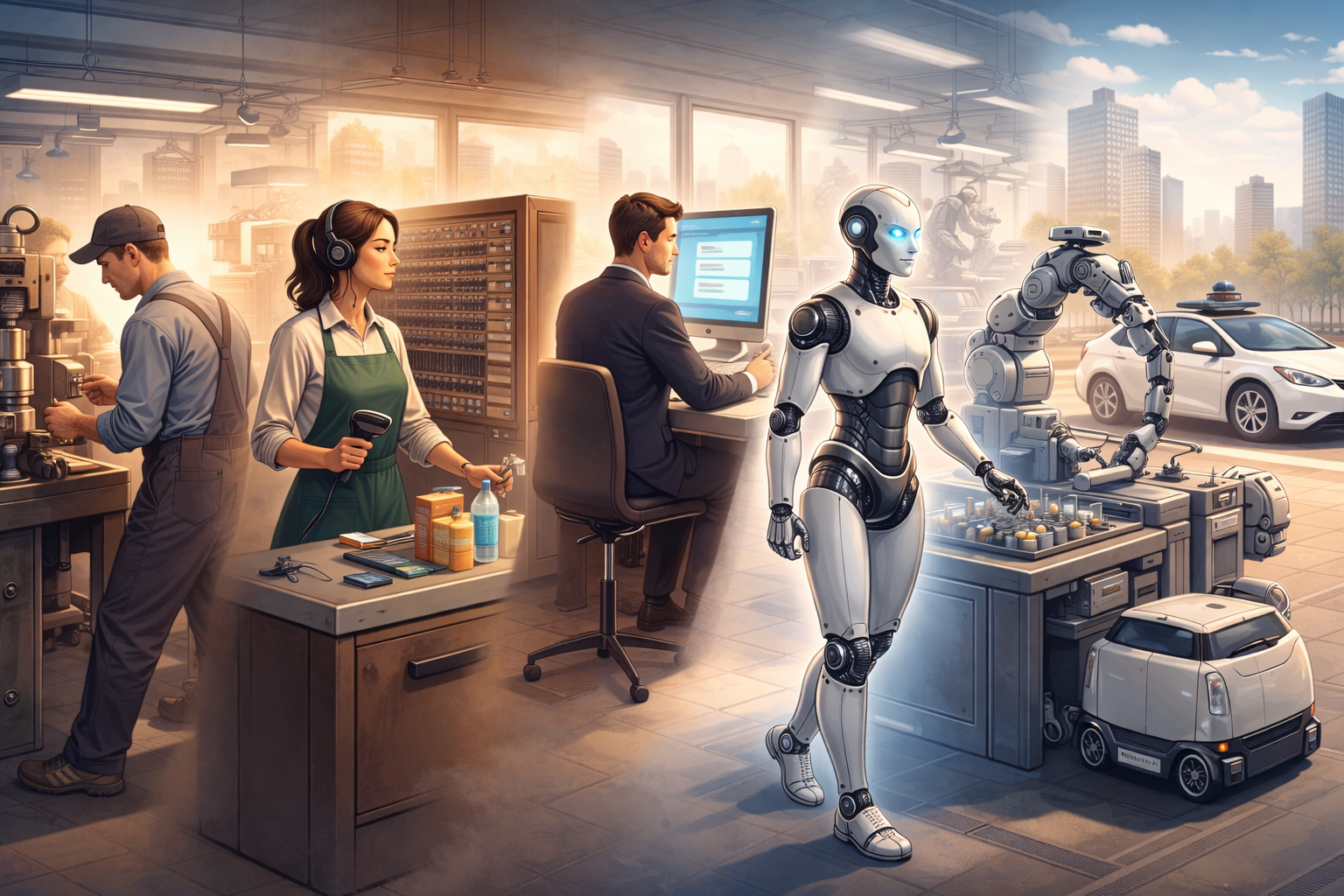
The Awkward Robot Overlap
An awkward moment happens as technology evolves, and we never talk about it.
It's the period when a human is doing a job *right next to* the machine that's about to replace them.
A cashier standing six feet from a self-checkout kiosk. A taxi driver idling at a red light next to a Waymo with no one in the driver's seat. A copywriter sits at her desk while the marketing VP tests ChatGPT on the same assignment.
This is “the awkward robot overlap.”
It is a strange experience. It’s disorienting. It’s uncertain, and uncertainty is scary.
I've been thinking about this a lot lately, because the overlap is happening everywhere right now. And it's moving fast.
But here's the thing: it's happened before.
Many times.
And if you look at the pattern, there's something surprising.
The Overlap Hall of Fame
Here's a list that I think is fascinating. Each of these is a moment when a human stood next to their replacement and kept working:
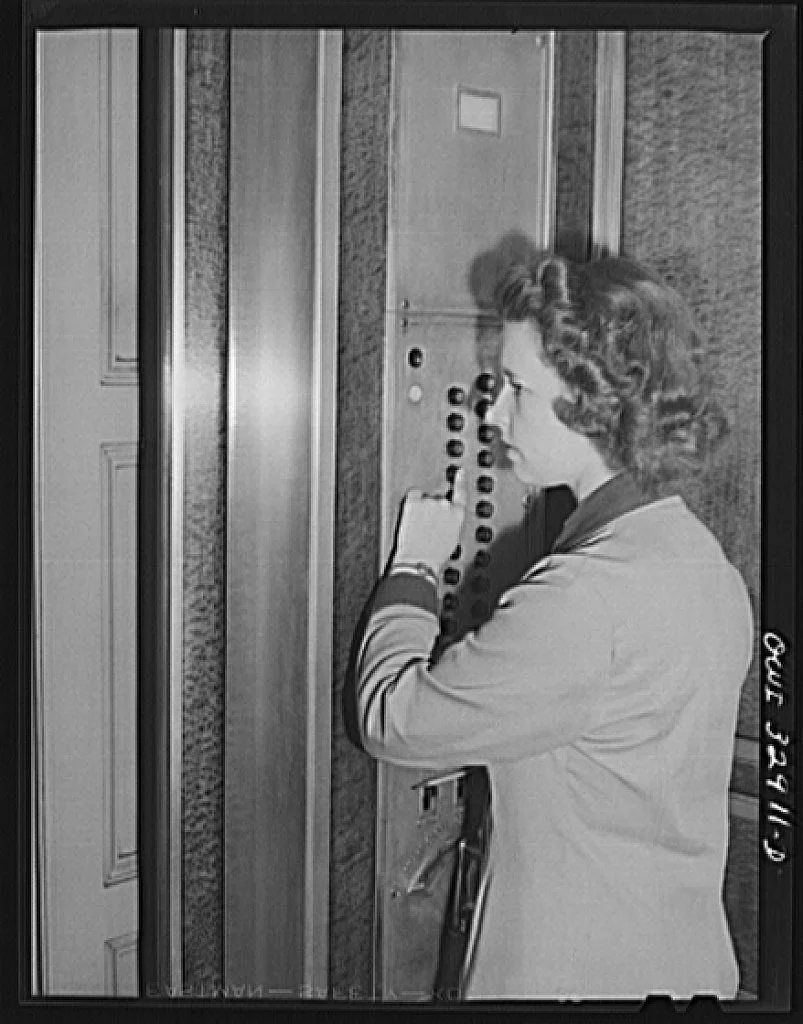
Elevator operators (1900s–1970s). This one is wild. Otis invented the automatic elevator around 1900. Push-button, no operator needed. People refused to use it. They'd walk in, see no operator, and walk right back out. So for decades, human operators kept riding up and down, pulling levers and announcing floors, while fully functional automatic buttons sat right there on the wall.
Finally, there was a massive strike in 1945 that shut down all of New York City, costing $100 million and stranding 1.5 million workers. Building owners finally pushed hard for automation. Even then, it wasn't until the 1970s that most elevators ran without a human inside. 70 years of awkward robot overlap.
According to Harvard economist James Bessen, elevator operator is the *only* occupation out of 270 listed in the 1950 Census that was fully eliminated by automation. The only one.
Telephone switchboard operators (1920s–1983). In 1920, telephone operator was one of the most common jobs for American women. Roughly 1 in 13 working women sat at a switchboard. AT&T had 160,000 of them.
Automatic switching technology was invented in 1892. Thirty years before AT&T even started adopting it. AT&T didn't fully phase out switchboard operators until 1978. The very last hand-crank switchboard operator in America–Susan Glines in Bryant Pond, Maine–hung up her headset in 1983. That's 91 years of awkward robot overlap.
Grocery store cashiers (1986–now). The first self-checkout machine was installed at a Kroger in Atlanta in 1986. Almost 40 years later, plenty of cashiers still exist.
And here's the twist: some companies that went all-in on self-checkout are actually *pulling back*. Dollar General eliminated self-checkout at 12,000 locations. Target is limiting it. Amazon shut down nine cashierless Go stores. Booths, a UK chain, ripped out the machines and brought cashiers back. Turns out, 15% of self-checkout users admitted to stealing. One study found that stores with 50% self-checkout transactions had losses 77% higher than average. (Sometimes the overlap goes through regressions.)
Factory floor workers (1960s–now). At BMW, “cobots” (collaborative robots) handle welding and bolting while humans do the finer assembly work right beside them. The robot spreads glue. The human smooths it with more agile fingers. This overlap has been running for over 60 years in various forms and shows no signs of ending. It's just shifting. The human's job keeps moving up the complexity ladder.
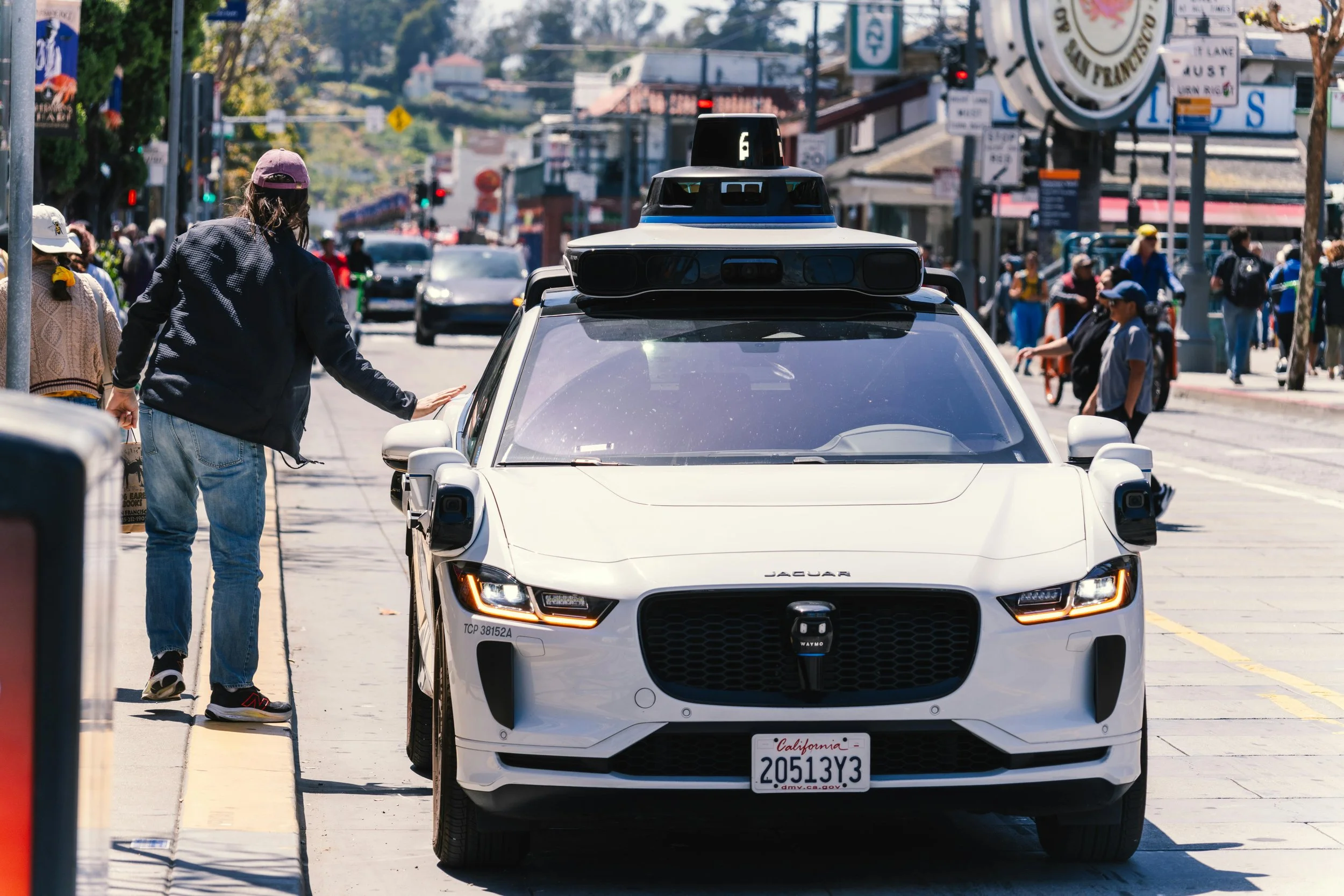
Taxi and rideshare drivers (2020s–now). Waymo is operating fully autonomous taxis in San Francisco, Phoenix, and Los Angeles right now. No safety driver. Tesla is rolling out Robotaxis with no steering wheel at all.
And right next to them at every intersection: human Uber and Lyft drivers doing the same job. Same route. Same passenger. One has a person behind the wheel, and one doesn't. We are living in the awkward robot overlap.
Semi-truck drivers (soon). Companies like Aurora and Kodiak are testing autonomous long-haul trucks on highways. The first commercial driverless freight routes are already running in Texas. Three and a half million truck drivers in the U.S. are watching this happen in real time. (I wrote about the incredible downstream effects of this on the entire economy 11 years ago.)
White-collar knowledge workers (now). AI tools can now do things that used to require years of education. Paralegals face an estimated 80% risk of automation by 2026. Law firms have cut entry-level hiring by 25%. JPMorgan told managers to avoid hiring where AI can do the work. Ford CEO Jim Farley said AI will replace "literally half of all white-collar workers." At Axios, managers now have to explain why AI won't do a job before they're allowed to hire a human for it.
That's the awkward robot overlap, happening in real time.
What It Feels Like
I think the part we don't talk about enough is how the overlap *feels*.
It's not dramatic. It's subtle, slow, and deeply weird.
Imagine you're a switchboard operator in 1955. You show up to work every day. You do your job. You're good at it. You know every regular caller by name. And there's this machine across the room that can do your entire job in milliseconds. It doesn't know anyone's name. It doesn't care. It just connects the call.
You're not fired. Not yet. You're just... standing next to your replacement. Every day.
The researchers who studied displaced telephone operators found that the women who lost their jobs saw lower earnings, were less likely to be working a decade later, and tended to end up in worse-paying positions. The overlap doesn't just replace your job. It replaces part of your identity.
That's the part that stings. Because your job isn't just a paycheck. It's an answer to the question: “What do you do?” It's how you introduce yourself at a party. It's how you explain your day to your kids.
When the machine shows up next to you, it doesn't just threaten your income. It threatens your (current) story about yourself.
How It Ends
But here's what the history actually shows, and I find this genuinely hopeful.
The overlap happens more slowly than the headlines claim. And the people who come after it do fine.
When AT&T automated its switchboards, the women who were already operators had to find new work. That's real and worth acknowledging.
But the next generation of young women found more rewarding work in other growing sectors. The economy absorbed them.
The same NBER researchers put it this way: "Given enough time, the economy and people, in general, are quite resilient."
Look at what happened with elevator operators. The job disappeared completely and nobody misses it. Nobody wishes there were a person riding in every elevator, or that they went to work in a 4-foot glass cube for 8 hours a day. The fact that someone *used to* stand there all day, pulling a lever, feels almost absurd.
That's the strange gift of the overlap. Once it's over, the old way looks obviously wasteful.
But while you're in it? It feels like the end of the world.
(Everyone wants someone else’s job to be automated.)
The Real Transition
Every awkward robot overlap is an identity transition.
You're not just losing a task. You're being forced to answer a harder question: “If the machine can do that, then what am I actually for?”
And the answer, every single time in history, has been the same. You're whatever the machine can't do.
The elevator operator's real value was never pulling the lever. It was making people feel safe. The switchboard operator's real value was never connecting the wires. It was knowing the community. The cashier's real value was never scanning barcodes. It was the brief human exchange at the end of a shopping trip (and apparently, theft prevention.)
The machine takes the task. You move on to better things.
This is actually an upgrade.
A painful, disorienting, upgrade. But an upgrade.
It’s painful and disorienting only because you haven’t taken the time to imagine the glorious future on the other side of the transition. You see uncertainty, uncertainty creates fear, and fear makes us freeze.
But every time a machine takes over the mechanical parts of a job, the humans left standing are doing more human work. More creative work. More relational work. More judgment-heavy, emotionally complex, weirdly-specific-to-being-a-person work.
The overlap forces us to become more ourselves. Not less.
The women who came after the switchboard operators didn't become lesser versions of operators. They became something better, more exciting, more fulfilling. No one pines for the switchboard.
No one yearns to hoe the fields by hand.
No one yearns for the elevator operator’s job.
The laptop workers don’t yearn to reformat spreadsheets or transfer data between spreadsheets and PowerPoint. And in 70 years, no one will yearn for the data processing job.
No one loves ALL of their job. So start thinking about which pieces you really love. Which are intrinsic to your unique abilities.
Processing Change
I don't know exactly how the current AI overlap plays out. Nobody does. The speed might be different this time. The breadth might be different.
But I keep having my mind blown by that Harvard study. Out of 270 occupations in the 1950 Census, automation fully eliminated exactly one.
The pattern isn't sudden mass elimination. The pattern is a subtle transformation. The job changes shape. The human moves to more creative, higher-value work. The machine gets the repetitive stuff. Eventually, we all press the elevator button without thinking twice.
If you're in the overlap right now, here's what I'd say: the discomfort you're feeling isn't a sign that something is wrong. It's a sign that you're being pushed toward whatever it is that only you can do. Your highest and best use. Something even more meaningful to you and to the world.
It’s won’t be a crisis of lost meaning, but a bonanza of new meaning.
But that’s the next post.

The Book of Elon collects and curates Elon’s wisdom from Transcripts, Tweets, and Interviews over the past two decades.
Through Elon’s own words, you will feel personally mentored to lead a rich life full of purpose, passion, and prosperity.
Releasing March 24th. Pre-order now to receive on launch day: